
1MPT, Department of Physiotherapy, Santosh Paramedical College and Hospital, Ghaziabad, India
2*Professor/Principal, Department of Physiotherapy, Santosh Paramedical College and Hospital, Ghaziabad, India
3 Professor, Department of Physiotherapy, Santosh Paramedical College and Hospital, Ghaziabad, India
4Dean, Santosh Paramedical College and Hospital, Ghaziabad, India
5Professor, Department of Community Medicine, Santosh Medical College, Santosh Deemed to Be University, Ghaziabad, India
Corresponding Author Email: deepak.raghav@santosh.ac.in
Article Publishing History
Received: 03/07/2026
Accepted After Revision: 09/08/2026
The UPSC Civil Services Examination (CSE) demands years of intense preparation, extensive study, and sustained mental effort. This prolonged strain often results in sleep disturbances, anxiety, and diminished well-being. Regular physical activity can counter these effects by enhancing physical fitness, reducing stress, and improving cognitive efficiency through mood-elevating neurotransmitters. However, many aspirants sacrifice essential sleep during preparation, leading to fatigue, reduced concentration, and greater psychological stress, ultimately impairing academic performance. Design: A cross-sectional study using Standardized Questionnaires to measure Physical activity engagement, Sleep Quality, self-esteem, and quality of life indices. A total of 200 UPSC aspirants were selected using purposive sampling, ensuring that participants were actively engaged in UPSC preparation and met the inclusion criteria. Eligible participants were required to be between 18 and 35 years of age. Data were gathered using a comprehensive set of validated self-report questionnaires, administered either online or in-person depending on the accessibility and convenience of the participants. The study investigates the association between physical activity (PA) and its impact on sleep quality, self-esteem, and overall quality of life (QOL) among UPSC aspirants during periods of intense academic stress. Findings indicate a positive correlation between regular PA and improved well-being across all three domains.
Aspirants who engaged in consistent physical activity reported significantly better sleep patterns, characterized by reduced sleep disturbances and enhanced restfulness. Additionally, PA was linked to higher self-esteem, fostering greater confidence and resilience in managing academic challenges. Improvements in QOL were also evident, with physically active aspirants demonstrating better psychological health, reduced stress levels, and a more balanced lifestyle compared to their sedentary counterparts
Academic Stress, Physical Activity, Long sedentary Study, Quality of Life , Self-esteem , Sleep Quality
Ritu, Deepak A, Tanvi A, Sharma R. K, Agrawal .Association Between Physical Activity, Sleep Quality, Self-Esteem, and Quality of Life During Academic Stress Among Union Public Service Commission Aspirants. SSN Journal of Management & Technology Research Journal. 2026;3(2)
Ritu, Deepak A, Tanvi A, Sharma R. K, Agrawal .Association Between Physical Activity, Sleep Quality, Self-Esteem, and Quality of Life During Academic Stress Among Union Public Service Commission Aspirants. SSN Journal of Management & Technology Research Journal. 2026;3(2). Available from: <a href=”https://shorturl.at/RRT4e“>https://shorturl.at/RRT4e</a>
INTRODUCTION
The Union Public Service Commission (UPSC) Civil Services Examination (CSE) in India is widely regarded as one of the most challenging and competitive academic endeavors globally. The protracted preparation period, immense syllabus, and high stakes for success create a chronic state of significant academic stress for its aspirants [1]. This sustained stress period is not merely an academic challenge; it constitutes a major psychosocial stressor that can permeate various dimensions of an individual’s well-being. The UPSC exam is known for its rigorous and prolonged preparation phases, which often span several years and include multiple stages such as the Preliminary, Mains, and Interview rounds [1].
Within this high-pressure environment, aspirants often report severe disruptions in their sleep patterns, experiencing poor sleep quality, irregular sleep-wake cycles, and insomnia symptoms [3,4]. Concurrently, the relentless cycle of preparation, performance anxiety, and social isolation can erode an individual’s self-esteem, leading to heightened self-doubt and diminished self-worth [5,6]. The cumulative effect of these factors—chronic stress, poor sleep, and low self-esteem—directly compromises the overall Health-Related Quality of Life (HR-QoL), shifting the focus from holistic well-being to a singular, often stressful, goal [7].
While the detrimental effects of this stress are well-documented, identifying modifiable protective factors is crucial. Physical activity (PA) is a well-established non-pharmacological intervention known to enhance psychological and physiological resilience. Evidence suggests that regular PA can serve as a buffer against stress by modulating the hypothalamic-pituitary-adrenal (HPA) axis, improving mood through the release of endorphins, and reducing anxiety [8]. Furthermore, PA is strongly associated with improved sleep quality by promoting deeper, more restorative sleep and stabilizing circadian rhythms [9]. It also plays a vital role in bolstering self-esteem by providing a sense of accomplishment, enhancing body image, and fostering self-efficacy [10].
However, a critical gap exists in understanding the specific role of physical activity within the unique and intense context of UPSC preparation. It remains unclear to what extent engagement in PA can mitigate the adverse effects of academic stress on the interconnected triad of sleep quality, self-esteem, and quality of life in this distinct population. Therefore, this study aims to investigate the association between levels of physical activity and sleep quality, self-esteem, and quality of life among UPSC aspirants during their preparatory period. The findings will provide empirical evidence to inform targeted lifestyle interventions, potentially enhancing the resilience and overall well-being of individuals navigating this demanding academic journey.
MATERIALS AND METHODS
This study adopted a cross-sectional research design to examine the interrelationships between physical activity, sleep quality, self-esteem, and quality of life among aspirants preparing for the Union Public Service Commission (UPSC) examinations.
Ethical Clearance: Ethical clearance was obtained from the institutional ethical committee (REF NO.- SCOP/OCT-24/ECN-94510023671) prior to the commencement of the study.
The study specifically focused on aspirants experiencing academic stress during these phases, aiming to understand how lifestyle factors influence their psychological and physical well-being. A total of 200 UPSC aspirants were selected using purposive sampling, ensuring that participants were actively engaged in UPSC preparation and met the inclusion criteria.
Eligible participants were required to be between 18 and 35 years of age, currently preparing for any stage of the UPSC examination, and willing to provide informed consent. The recruitment process emphasized voluntary participation and ethical transparency, with all individuals being briefed about the study’s objectives, potential risks, benefits, and confidentiality protocols before data collection commenced.
Data were gathered using a comprehensive set of validated self-report questionnaires, administered either online or in-person depending on the accessibility and convenience of the participants. These instruments were chosen to capture a multidimensional profile of each aspirant’s lifestyle, psychological state, and academic stress levels.
Academic Stress was measured using the Academic Performance Scale [11], which evaluates perceived stress arising from academic workload, examination pressure, and performance expectations. This scale provided insights into how aspirants perceive and respond to the demands of UPSC preparation. Physical Activity was assessed using the (IPAQ) International Physical Activity Questionnaire [12].
This tool captures the frequency, duration, and intensity of physical activities performed over the past seven days, including walking, moderate-intensity activities, and vigorous-intensity exercises. It also accounts for sedentary behaviour, offering a holistic view of the participant’s activity levels. Sleep Quality was evaluated using the Pittsburgh Sleep Quality Index (PSQI), a widely used instrument that assesses sleep patterns, disturbances, and overall sleep quality over a one-month interval. The PSQI provides a global score, with higher scores indicating poorer sleep quality, thereby helping to identify aspirants at risk of sleep-related issues [13].
Self-esteem was measured using the Rosenberg Self-Esteem Scale (RSES) [14], a 10-item scale designed to assess global self-worth. It includes both positively and negatively worded statements, rated on a four-point Likert scale ranging from “strongly agree” to “strongly disagree.” This scale is widely recognized for its reliability in evaluating personal confidence and self-perception.
Quality of life was assessed using the World Health Organization Quality of Life-BREF (WHOQOL-BREF) questionnaire, which evaluates an individual’s perception of their position in life within the context of their culture, value systems, goals, expectations, and concerns. The WHOQOL-BREF comprises four domains: physical health, psychological health, social relationships, and environmental factors [15]. Participants responded to items on a five-point Likert scale, with higher scores indicating better perceived quality of life.
The domain scores were calculated by averaging the relevant items and multiplying the mean by four to align with the scoring system used in the WHOQOL-BREF-100 format. This instrument provided a comprehensive and multidimensional understanding of the aspirants’ overall well-being during their high-stress academic preparation. Together, these tools provided a robust framework for analyzing the complex interplay between physical activity and psychological health indicators among UPSC aspirants. The methodology was designed to ensure both depth and breadth in data collection, enabling the researchers to draw meaningful conclusions about the role of lifestyle factors in academic resilience and well-being.
PROCEDURES
Assessment of Physical Activity (IPAQ -International Physical Activity Questionnaire): Tool: International Physical Activity Questionnaire
Purpose: To assess the level of physical activity (PA) across different intensities (heavy lifting, aerobics, moderate-intensity activity, vigorous – intensity activity) and Sedentary behavior.
Procedure: The IPAQ includes questions related to all the vigorous activities that you did in the last 7 days. Vigorous physical activities refer to activities that take hard physical effort and make you breathe much harder than normal. Think only about those physical activities that you did for at least 10 minutes at a time.
Assessment of Pittsburgh Sleep Quality Index (PSQI)
Tool: PSQI Pitts-burgs sleep quality index Purpose: To identify the last month’s sleep habits.
Procedure: PSQI consists of 5 questions related to your usual sleep habits during the past month only. Answers should indicate the most accurate reply for the majority of days and nights in the past month.
Assessment of Quality of life (WHOQOL-BREF):
Tool: WHO Quality of Life (WHOQOL-BREF) questionnaire.
Purpose: To measure the general quality of life (QOL) across four domains: physical health, psychological health, social relationships, and environment.
Procedure: The WHOQOL-BREF consists of 7 questions, with answers on a 5-point Likert scale ranging from 1 (poor) to 5(excellent). Participants will answer questions related to physical health (e.g., energy levels, pain intensity), psychological health (e.g., mood, self- esteem), social relationships (e.g., interpersonal relationships, support), and environmental factors (e.g., living conditions, financial resources). The total score will be divided into domain-specific scores and a general QOL score.
Assessment of Self-Esteem Scale
Tool: Rosenberg Self-Esteem Scale
Purpose: To measure an individual’s overall sense of self-worth and self-acceptance. Procedure: It consists of 10 statements related to overall feelings of self-worth or self-acceptance. The items are answered on a four – point scale ranging from strongly agree to strongly disagree.
Assessment of Academic Performance Scale
Tools: Academic performance scale
Purpose: To assess and evaluate student’s academic achievements and behaviors
Procedure: A rating scale where aspirants provide responses based on various academic behaviors and achievements.
Data Collection & Analysis
Informed consent: Aspirants was provided with the study’s purpose, benefits, risks and confidentiality agreements. Informed consent was obtained. Survey Completion:
Participants will fill out the following questionnaires. Data were then compiled, and SPSS 2.0 were applied.
Statistical Analysis: Descriptive statistics were used to summarise the data (means, standard deviation, frequency). Correlation Analysis: Correlation analysis was performed to examine the relationship between physical activity, sleep quality, self – esteem, and quality of life among UPSC aspirants. Multiple Regression Analysis: A multiple linear regression was conducted to examine whether sleep quality, self-esteem, and quality of life in UPSC aspirants during the academic stress periods.
This analysis can help determine how much these factors predict each other. Scoring: Each scale will be scored according to its represented instructions. IPAQ: The IPAQ asks about Physical Activity in Three Domains: Waling, Moderate – intensity Activity, Vigorous – intensity activity. PSQI: The PSQI is a self-rated questionnaire assessing sleep quality and disturbances over a 1-Months periods. It yields a global score, where a higher score indicates poorer sleep quality. RSES: The RSES consists of 10 items. Each item is rated on a 4-point Likert scale. Strongly Disagree, Disagree, Agree, Strongly Agree. WHOQOL- To analyze WHOQOL- BREF data, start by calculating domain scores by averaging the relevant items for each domain.
Domains scores are scaled in a positive direction (i.e higher scores denote higher quality of life). The mean scores of the items within each domain are used to calculate the domain score. Mean scores are then multiplied by 4 to make domain scores comparable with the scores used in WHOQOL- BREF-100
RESULTS
Table 1: Frequency and percentage and mean and SD of International Physical Activity Questionnaire in aspirants. N = 200
| Physical Activity Level | Frequency (n) | Percentage (%) |
| Low | 65 | 32.5% |
| Moderate | 90 | 45.0% |
| High | 45 | 22.5% |
| Total | 200 | |
| Mean + SD | 290 + 310 + 350 | |
The analysis of physical activity levels among 200 UPSC aspirants, assessed using the International Physical Activity Questionnaire (IPAQ), reveals that the majority of participants (45%) fall under the moderate activity category, while 32.5% exhibit low activity levels, indicating physical inactivity. Only 22.5% of aspirants reported high levels of physical activity. The mean IPAQ score was approximately 290 (±310–350), suggesting that overall activity levels among aspirants are relatively low to moderate. These findings highlight a concerning trend of sedentary behavior among a significant proportion of candidates, likely due to prolonged study hours and limited time for exercise during the preparation phase. This underscores the need for targeted interventions to promote physical activity as a strategy to enhance health and well-being in this high-stress academic population

Table 2: Frequency and percentage and mean and SD of Pittsburgh sleep quality index N= 200
| Sleep Quality Category | Frequency (n) | Percentage (%) |
| Good Sleep ( 0-5 ) | 58 | 29.0% |
| Poor Sleep ( 6-10 ) | 94 | 47.0% |
| Very Poor Sleep (>10) | 48 | 24.0% |
| Total | 200 | |
| Mean + SD | 7.8+ 3.2 + 2 | |
The analysis of sleep quality among 200 UPSC aspirants reveals a concerning trend of inadequate rest during the preparation phase. As shown in the table, only 29% of participants reported good sleep quality (scores 0–5), while the majority experienced compromised sleep: 47% fell into the poor sleep category (scores 6–10), and 24% reported very poor sleep (scores above 10). The mean sleep quality score was 7.8 (±3.2), indicating that most aspirants struggle with suboptimal sleep patterns. These findings suggest that nearly 70% of candidates suffer from poor to very poor sleep, which can negatively impact cognitive performance, emotional stability, and overall well-being. This highlights the urgent need for interventions promoting healthy sleep habits alongside academic preparation to mitigate the adverse effects of prolonged stress and irregular routines
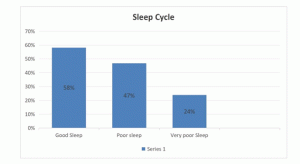
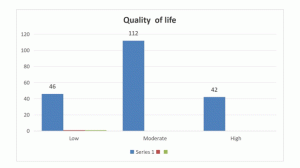
Table 3: Frequency and percentage and mean and SD of quality of life in UPSC aspirant. N= 200.
| QOL Category | Frequency (n) | Percentage (%) | ||
| Low QOL | 46 | QOL Category | Frequency (n) | Percentage (%) |
| Low QOL | 46 | 23% | ||
| Moderate QOL | 112 | 56% | ||
| High QOL | 42 | 21% | ||
| Total | 200 | 100% | ||
| Mean + SD | 62.4 + 11.6 |
The analysis of Quality of Life (QOL) among 200 UPSC aspirants indicates that the majority (56%) reported a moderate level of QOL, while 23% experienced low QOL and only 21% achieved a high QOL. The mean QOL score was 62.4 with a standard deviation of 11.6, reflecting an overall moderate quality of life within the study population. These findings suggest that most aspirants maintain a basic level of well-being but lack the balance required for optimal health and satisfaction. The relatively high proportion of individuals with low QOL highlights the negative impact of prolonged academic stress, limited social interaction, and sedentary lifestyles during the preparation phase. This underscores the importance of incorporating lifestyle interventions, such as physical activity and stress management strategies, to enhance QOL and support aspirants’ mental and physical health.
The analysis of Quality of Life (QOL) among 200 UPSC aspirants indicates that the majority (56%) reported a moderate level of QOL, while 23% experienced low QOL and only 21% achieved a high QOL. The mean QOL score was 62.4 with a standard deviation of 11.6, reflecting an overall moderate quality of life within the study population. These findings suggest that most aspirants maintain a basic level of well-being but lack the balance required for optimal health and satisfaction. The relatively high proportion of individuals with low QOL highlights the negative impact of prolonged academic stress, limited social interaction, and sedentary lifestyles during the preparation phase. This underscores the importance of incorporating lifestyle interventions, such as physical activity and stress management strategies, to enhance QOL and support aspirants’ mental and physical health.
DISCUSSION
The inverse relationship observed between PA levels and poor sleep quality (PSQI scores) aligns consistently with a growing body of evidence on non-pharmacological sleep interventions. The high cognitive demands and persistent psychological distress inherent in UPSC preparation are known to dysregulate the autonomic nervous system, leading to hyperarousal and sleep-onset insomnia. Our results suggest that PA may act as a potent countermeasure to this stress-induced arousal. As proposed by [9], the thermoregulatory model of sleep posits that the rise in core body temperature during exercise followed by a post-exercise decline promotes the initiation of sleep. Furthermore, PA is known to aid in the regulation of circadian rhythms, which are often severely disrupted in aspirants with erratic study schedules1. Therefore, the improvement in sleep quality among active aspirants is likely not merely a correlate but a direct physiological benefit of PA, which helps to normalize sleep architecture disrupted by chronic academic stress.
The positive correlation between PA and self-esteem (RSES scores) underscores the psychological benefits of exercise beyond its physical dimensions. The UPSC journey is often marked by setbacks and a perceived loss of control, which can systematically undermine an individual’s sense of self-worth [5]. Engagement in PA provides a structured outlet where aspirants can experience mastery, achievement, and immediate, tangible progress—elements that are often elusive in their primary academic pursuit.
This aligns with the principle of self-efficacy proposed by Bandura, where successfully completing a workout or improving one’s fitness fosters a broader sense of competence [10]. This “mastery experience” can generalize to their academic endeavors, building resilience against the erosive effects of failure. Additionally, the neurobiological effects of PA, including the release of endorphins and brain-derived neurotrophic factor (BDNF), contribute to improved mood and cognitive function, which in turn positively influence self-perception [8].
The strongest findings of our study pertain to the significant positive association between PA and overall QoL (WHOQOL-BREF scores). This can be best understood through a holistic, biopsychosocial model. We posit that PA does not improve QoL in isolation but acts as a central node that positively influences multiple other domains. Physically, it reduces somatic complaints of stress, such as tension headaches and fatigue. Psychologically, by improving sleep and self-esteem as demonstrated, it directly alleviates two major burdens on mental well-being. Socially, even moderate PA, such as a walk in a park or a group yoga session, can reduce the social isolation common among aspirants, providing opportunities for informal interaction7.
Thus, the enhancement in QoL is a synergistic outcome: better sleep leads to better mood and cognitive function during study, higher self-esteem provides the emotional fortitude to cope with stress, and the physical vigor from exercise sustains the demanding preparation routine. This creates a positive feedback loop, breaking the vicious cycle of stress-poor sleep-low esteem that diminishes QoL. It goes beyond the traditional focus on academic performance to highlight its critical role in enhancing sleep quality, fostering self-esteem, and improving the overall quality of life for aspirants during a period of immense stress. These findings have significant practical implications for coaching centers, educational institutions, and aspirants themselves. They highlight the need to move beyond a pure academic focus and integrate physical wellness into the preparation curriculum.
CONCLUSION
The study concludes that physical activity plays a vital role in enhancing sleep quality, self-esteem, and overall quality of life among UPSC aspirants. It emphasizes the need for a holistic well-being approach that integrates physical, mental, and social health, viewing exercise as an essential component of effective exam preparation rather than a mere leisure activity.
Ethical Clearance: Ethical clearance was obtained from Santosh College of Physiotherapy, Santosh Medical College and Hospital, Ghaziabad, dated 18-10-24 (REF NO.- SCOP/OCT-24/ECN-94510023666).
Conflict of Interest- None
Funding– Self-funded
ACKNOWLEDGEMENTS
The authors acknowledge all those who provided support and constructive input throughout this research.
Data availability: The data associated with the paper are not publicly available but can be obtained from the corresponding author upon reasonable request.
REFERENCES
- Fatima M. A mixed method investigation of psychological distress among UPSC CSE aspirants. Int J Psychol Res. 2025;7(2):05-12. doi:10.33545/26648903.2025.v7.i2a.87
- Yadav P, Gupta A. Effect of UPSC Exam Competition on the Mental Health of Students. Research and Reviews: A Journal of Health Professions. 2025;15(01):6-11.
- Kredlow MA, Capozzoli MC, Hearon BA, Calkins AW, Otto MW. The effects of physical activity on sleep: a meta-analytic review. J Behav Med. 2015;38(3):427-449. doi:10.1007/s10865-015-9617-6
- Cheng R, Yang L, Kang SJ. A study on the relationship between high school students’ sleep quality, physical exercise, academic stress, and subjective well-being. BMC Psychol. 2025;13:180. doi:10.1186/s40359-025-02497-3
- Chauhan DrA. Psychological effects of competitive exams on student identity and self-worth. J Soc Rev Dev. 2026;5(2):82-86. doi:10.64171/JSRD.5.1.82-86
- Dąbrowska-Galas M, Dąbrowska J. Physical Activity Level and Self-Esteem in Middle-Aged Women. International Journal of Environmental Research and Public Health. 2021;18(14):7293. doi:10.3390/ijerph18147293
- Ramón-Arbués E, Echániz-Serrano E, Martínez-Abadía B, et al. Predictors of the Quality of Life of University Students: A Cross-Sectional Study. Int J Environ Res Public Health. 2022;19(19):12043. doi:10.3390/ijerph191912043
- Kandola A, Ashdown-Franks G, Hendrikse J, Sabiston CM, Stubbs B. Physical activity and depression: Towards understanding the antidepressant mechanisms of physical activity. Neuroscience & Biobehavioral Reviews. 2019;107:525-539. doi:10.1016/j.neubiorev.2019.09.040
- Dolezal BA, Neufeld EV, Boland DM, Martin JL, Cooper CB. Interrelationship between Sleep and Exercise: A Systematic Review. Adv Prev Med. 2017;2017:1364387. doi:10.1155/2017/1364387
- Han X, Li H, Xiao C, et al. Physical activity enhances college students’ mental health through social adaptability and exercise behavior chain mediation. Sci Rep. 2025;15:21127. doi:10.1038/s41598-025-07791-z
- Sun J, Dunne MP, Hou X yu, Xu A qiang. Educational Stress Scale for Adolescents: Development, Validity, and Reliability With Chinese Students. Journal of Psychoeducational Assessment. 2011;29(6):534-546. doi:10.1177/0734282910394976
- Craig CL, Marshall AL, Sjöström M, et al. International physical activity questionnaire: 12-country reliability and validity. Med Sci Sports Exerc. 2003;35(8):1381-1395. doi:10.1249/01.MSS.0000078924.61453.FB
- Buysse DJ, Reynolds CF, Monk TH, Berman SR, Kupfer DJ. The Pittsburgh Sleep Quality Index: a new instrument for psychiatric practice and research. Psychiatry Res. 1989;28(2):193-213. doi:10.1016/0165-1781(89)90047-4
- Using the Rosenberg Self-Esteem Scale | SOCY l Sociology Department l University of Maryland. Accessed July 8, 2026. https://socy.umd.edu/about-us/using-rosenberg-self-esteem-scale
- WHOQOL-BREF| The World Health Organization. Accessed July 8, 2026. https://www.who.int/tools/whoqol/whoqol-bref.