
Department of Biotechnology, Sant Hirdaram Girls College, Bhopal, 462030 (MP) India.
Corresponding author email: darakhshan66@gmail.com
Article Publishing History
Received: 15/10/2025
Accepted After Revision: 27/12/2025
Microplastic pollution has become a major environmental concern due to its persistence, ubiquity, and complex impacts. Defined as plastic particles smaller than 5 mm, microplastics originate from primary sources such as microbeads and synthetic fibres, and secondary fragmentation of larger plastics. Their widespread presence in water, soil, and air raises serious risks for ecosystems, food safety, and human health. Traditional Environmental Management Systems (EMS), including ISO 14001, were not designed to address pollutants of such microscopic scale and diverse composition. This review synthesises current knowledge on microplastic sources, pathways, and impacts, while exploring how EMS can evolve to integrate microplastic‑specific strategies. Embedding microplastic management into EMS aligns with sustainability agendas such as circular economy practices and extended producer responsibility. Achieving this requires technological innovation, improved recycling, biodegradable alternatives, and governance mechanisms that harmonise standards. Interdisciplinary collaboration is essential to strengthening EMS frameworks and mitigating microplastic pollution effectively.
Microplastics, Environmental Management Systems, Pollution Mitigation, Sustainability, Human Health.
Khan D. Environmental Management Systems and Microplastic Pollution: Bridging Science, Policy, and Practice. SSN Journal of Management & Technology Research Journal. 2025;2(3).
Khan D. Environmental Management Systems and Microplastic Pollution: Bridging Science, Policy, and Practice. SSN Journal of Management & Technology Research Journal. 2025;2(3). Available from: <a href=”https://shorturl.at/Z2DoD“>https://shorturl.at/Z2DoD</a>
INTRODUCTION
Plastic pollution has emerged as one of the most pressing environmental challenges of the 21st century, with microplastics, i.e., plastic particles smaller than 5 mm, representing a particularly insidious form of contamination [1]. Unlike larger plastic debris, microplastics are pervasive, persistent, and capable of infiltrating nearly every environmental compartment, including marine and freshwater systems, soils, and the atmosphere [2,3]. Their ubiquity is driven by both primary sources (manufactured microbeads, industrial abrasives, synthetic fibres) and secondary sources (fragmentation of larger plastic items through weathering, mechanical abrasion, and photodegradation). As a result, microplastics are now recognised as an emerging pollutant with global relevance, raising concerns for ecological integrity, food safety, and human health [4].
The environmental management of microplastics presents unique challenges. Traditional Environmental Management Systems (EMS), such as those guided by ISO 14001 standards, were designed to address broader categories of pollution and resource use. However, the microscopic scale, diverse polymer composition, and complex environmental behaviour of microplastics complicate monitoring, risk assessment, and mitigation within existing EMS frameworks, [5,6]. Unlike conventional pollutants, microplastics are not easily captured by standard treatment technologies, nor are they consistently regulated across jurisdictions. This gap underscores the need to integrate microplastic-specific strategies into EMS, aligning scientific advances with policy and industry practices [7].
Microplastics also pose multifaceted risks. Ecologically, they can disrupt food webs, reduce biodiversity, and alter ecosystem functions. Chemically, they act as vectors for additives and persistent organic pollutants, potentially amplifying toxicity. Biologically, laboratory studies suggest that microplastics may induce oxidative stress, inflammation, and endocrine disruption in organisms, though human health implications remain under investigation [8,9]. These uncertainties demand precautionary approaches, particularly in regions such as Asia, where rapid industrialisation, high population density, and inadequate waste management systems exacerbate plastic leakage into the environment [10,11].
Figure 1: schematic overview of microplastic pathways, biomagnification and management strategies.
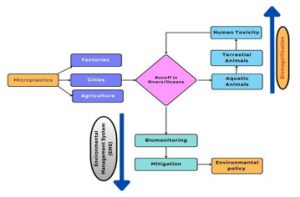
At the same time, microplastic pollution intersects with broader sustainability agendas, including the circular economy, extended producer responsibility, and corporate environmental accountability. Embedding microplastic management into EMS offers a pathway to operationalise these agendas, enabling organisations to systematically identify, monitor, and reduce microplastic emissions [12,13]. This integration requires not only technological innovation such as advanced filtration, biodegradable materials, and improved recycling but also governance mechanisms that harmonise standards, foster transparency, and encourage stakeholder participation (fig.1).
This review therefore aims to synthesise current knowledge on microplastic pollution and critically examine how Environmental Management Systems can evolve to address this emerging challenge. By exploring sources, pathways, impacts, and management responses, it highlights both the scientific complexities and the institutional opportunities for embedding microplastic risk into EMS frameworks. Ultimately, the paper seeks to chart future directions for research, policy, and practice, emphasising the importance of interdisciplinary collaboration in mitigating microplastic pollution and safeguarding environmental and human health.
Sources and Pathways of Microplastics: Microplastics are divided into two types: primary and secondary microplastics. Primary microplastic is synthetic microbeads developed for domestic and industrial purposes. Microbeads are used as raw materials in the plastic industry for cosmetics, detergents, and other hygiene and personal care products [14]. About 93% of the microplastics used as microbeads in personal-care products and cosmetics were composed of microplastics. These tiny microbeads can be transported to wastewater treatment plants, released into rivers from water treatment plants, and enter into the oxidation ponds and sewage sludge or eventually into the sea on a global scale [15,16]. These microplastic particles can also pass-through filtration systems into the water bodies and affect aquatic habitats [17].
Secondary microplastics are plastic particles which get fragmented by photo-degradation, mechanical abrasions, and physical and biochemical reactions. It includes fishing nets, industrial resin pellets, domestic items, and other discarded plastic debris [18]. Other sources of secondary microplastic include effluent treatment plants, landfills, irrigation, industrial wastewater and domestic usage [19].
Microplastics in the environment appear in different shapes and sizes in the form of spheres, beads, pellets, foam, fibres, fragments, films, and flakes. The morphology and texture of microplastic particles depend on the type of polymer used to make its original form as the manufacturers aim to develop plastics with certain features (e.g., flexibility, roughness, resistance, and durability) [20]. For example, polyurethane (PU) is a polymer used to make flexible foams. Polyethene terephthalate (PET) in textile fibres and drink bottles, and Polystyrene (PS) in packaging and building insulation. However, these polymers are composed of diverse monomers, which might be detrimental to the environment [21]. The shape of secondary microplastic particles is also influenced by the fragmentation process and the retention time in the environment [22].
The colour of microplastic particles helps identify the sources of plastic fragments and potential pollutants during sample preparation [23]. Colour can also enable the separation of distributed microplastic among large quantities from other debris. In previous studies, microplastics have been evident in different colours including red, orange, yellow, brown, tan, off-white, white, grey, blue, green, and so on [24].
The animals always tend to ingest MPs similar in colour to their prey. The colour can also affect the intake of microplastics by aquatic organisms. In a study, Schuyler et al. reported that sea turtles often die due to the accidental intake of transparent and white plastic fragments [25,26]. These diverse types of microplastics in the environment, which differ in shape, colour, and size, have different likelihoods of ingestion by aquatic biota has become the growing problem of plastic pollution [27].
Environmental Distribution and Impacts:
Microplastics in aquatic ecosystems: Aquatic ecosystems are major sinks for global plastic pollution, with microplastics now pervasive in marine and freshwater systems. Their persistence and interactions with biota make them key targets for environmental management. Understanding their sources, distribution, and impacts is vital for effective monitoring and mitigation [28,29]. Over the past two decades, research has documented microplastics as widespread and ecologically significant. Rivers and coastal runoff are primary sources, fragmenting into microplastics that accumulate in ocean gyres and sediments [30,31]. Fishing gear, aquaculture, and shipping further contribute to marine microplastic loads. Biofouling and vertical transport facilitate sinking, contaminating benthic habitats and sediments [32]. Marine studies show plankton ingest microplastics, reducing feeding efficiency and disrupting energy transfer [33,34]. Microplastics also affect microbial communities, potentially altering nutrient cycling and ecosystem resilience [35,36,37]
Freshwater systems have received less attention, but recent research highlights rivers as key pathways transporting microplastics from land to sea. Major sources include urban wastewater, stormwater runoff, and industrial discharges, with inadequate treatment in many Asian cities worsening contamination [38,39]
Freshwater studies report microplastic ingestion by zooplankton, invertebrates, and fish, impacting growth and survival. Microplastics can carry heavy metals and pollutants, increase chemical risks, and alter sediment quality, potentially disrupting ecological processes [40,41].
Marine systems show greater diversity of microplastics due to multiple sources and currents, while freshwater systems reflect localized urban and industrial inputs. Various Asian studies report high microplastic concentrations in rivers and coasts, linked to poor waste management and industry [42,43]. Aquaculture faces increasing risks, and monsoons accelerate plastic transport, compounding management challenges [44,45] The significant gaps remain, including inconsistent methods and limited understanding of long-term ecological impacts. Translating laboratory findings to natural populations is challenging [46]. The literature calls for standardized monitoring, interdisciplinary research, and integration of microplastic indicators into environmental management Systems.
Microplastics in Terrestrial Environments and their Contamination: Microplastic contamination in terrestrial environments has received increasing scholarly attention, as soils and land-based systems are now recognized as significant reservoirs and pathways for plastic pollution. Although initial research focused on marine ecosystems, subsequent studies have shown that terrestrial environments may contain higher concentrations of microplastics, primarily due to direct inputs from agriculture, waste management, and urban activities [47,48].
Several studies have documented the presence of microplastics in agricultural soils, especially in regions where plastic mulch films are widely used. These films, used to conserve moisture and control weeds, degrade over time and fragment into microplastic particles that are found in soil matrices [49,50]. The application of sewage sludge as fertiliser constitutes another major source, introducing microplastics originating from wastewater effluents and household products. Evidence indicates that microplastics in soils can alter soil structure, reduce porosity, and impact microbial communities, with potential consequences for nutrient cycling and crop productivity [51,52] Experimental studies further suggest that microplastics may indirectly influence plant growth by modifying soil physicochemical properties, although findings remain inconsistent across species and soil types [53].
Landfills and open dumping sites are critical sources of terrestrial microplastic contamination. Inadequately managed landfills permit plastics to fragment under mechanical stress and ultraviolet exposure, releasing microplastics into adjacent soils and leachates. These particles may migrate into groundwater or be transported by surface runoff into rivers and lakes. Research in Asia demonstrates that informal waste disposal practices, such as open burning and unregulated dumping, intensify microplastic leakage into terrestrial systems [54,55]. The absence of engineered control structures in many developing regions further elevates the risk of widespread contamination.
Urban dust, tire wear particles, and synthetic textile fibres contribute substantially to terrestrial microplastic loads. Road runoff and atmospheric deposition introduce microplastics into soils, primarily in densely populated and industrialized areas. Industrial zones, including plastic manufacturing and recycling facilities, have been identified as hotspots for soil contamination, with elevated concentrations of microplastics detected in surrounding areas [56,57]. These observations emphasize the role of urbanization and industrial activity in molding terrestrial microplastic profiles.
Microplastics in soils interact with biota at various levels. Earthworms and other soil invertebrates ingest microplastics, which can disrupt growth, reproduction, and survival [58]. Reported alterations in soil microbial communities raise concerns regarding long-term impacts on soil fertility and ecosystem services. Additionally, microplastics can adsorb heavy metals and organic pollutants, serving as vectors for chemical co-contaminants [59]. This dual role as both physical and chemical stressors complicates risk assessment and management strategies.
The combination of intensive agriculture, widespread use of plastic mulching, and inadequate waste management infrastructure renders terrestrial microplastic contamination particularly acute in Asian countries. Studies conducted in China, India, and Southeast Asia have documented high concentrations of microplastics in agricultural soils, often linked to sludge application and the use of plastic film [60,61,62]. Informal recycling and landfill practices have contributed to extensive contamination. Seasonal monsoons and flooding events further facilitate the transport of microplastics from terrestrial to aquatic systems, reinforcing the connection between environmental compartments.
Although evidence is increasing, research on terrestrial microplastics remains less developed than studies focused on aquatic environments. Variations in sampling and extraction methodologies hinder comparability across studies. Long-term ecological impacts on soil health and crop yields are poorly understood, and few studies have examined human exposure pathways via terrestrial contamination (e.g., crops grown in contaminated soils). The literature emphasizes the need for standardized protocols, interdisciplinary approaches, and integration of terrestrial monitoring into environmental management systems.
Human Health Implications: Microplastics have been detected across multiple trophic levels, raising concerns about their transfer through food chains and eventual human exposure. The literature consistently highlights ingestion of microplastics by aquatic organisms, accumulation in edible tissues, and the potential for biomagnification, though the extent of human health risks remains under investigation [63,64]. Early studies demonstrated that plankton readily ingest microplastics, mistaking them for food particles. This ingestion reduces feeding efficiency and alters energy assimilation, weakening the base of aquatic food webs [14]. Subsequent research confirmed that fish and shellfish accumulate microplastics in gastrointestinal tracts, with evidence of trophic transfer to higher predators [65].
Microplastics have been detected in commercially important seafood species, including fish, bivalves, and crustaceans, raising concerns about dietary exposure [66]. Studies report microplastics in table salt, bottled water, and even staple foods, suggesting that ingestion is not limited to seafood consumption [67]. Human stool samples analysed in pilot studies have confirmed the presence of microplastics, providing direct evidence of exposure [68]. While the toxicological implications remain uncertain, ingestion of microplastics and associated chemicals (e.g., additives, persistent organic pollutants) is considered a plausible risk factor for gastrointestinal and systemic health effects.
In addition to ingestion, inhalation of airborne microplastics represents another exposure route. Indoor environments, particularly those with synthetic textiles, show elevated concentrations of airborne fibres [69]. Occupational studies in textile and plastic industries report respiratory symptoms linked to microplastic exposure, though general population data remain limited. Dermal exposure through personal care products containing microbeads has been suggested, but current evidence indicates this pathway is less significant compared to ingestion and inhalation. Microplastics may interact with skin microbiota or penetrate through wounds, though these pathways remain poorly studied [70].
Experimental studies demonstrate that small microplastics and nano plastics can cross biological barriers under certain conditions, potentially reaching systemic circulation. In vitro research shows cytotoxicity, genotoxicity, and endocrine-disrupting effects, raising concerns about long-term systemic impacts [71]. The role of microplastics as vectors for chemical additives and sorbed pollutants further complicates risk assessment, as these compounds may contribute to endocrine, metabolic, or carcinogenic outcomes independent of the particle itself.
The dependence on seafood and aquaculture in Asian countries increases dietary exposure risks. Research conducted in China, India, and Southeast Asia has identified microplastics in fish and shellfish available in local markets, frequently associated with polluted rivers and coastal waters [72,73]. Additionally, the extensive consumption of bottled water and salt derived from contaminated sources further elevates exposure. Informal recycling practices and the open burning of plastics intensify atmospheric contamination, thereby raising inhalation risks among urban populations. However, only a few studies have actually quantified human intake levels or assess long-term health outcomes which emphasises the need for standardised exposure assessment, longitudinal epidemiological studies, and integration of human biomonitoring into environmental management systems.
Environmental Management Systems (EMS) Framework: Environmental Management Systems (EMS) provide structured approaches for organizations to monitor, evaluate, and mitigate environmental impacts. Traditionally guided by frameworks such as ISO 14001, EMS have been applied to issues including air pollution, wastewater management, and resource efficiency [5]. However, the emergence of microplastics as a pervasive pollutant has prompted scholars and policymakers to consider how EMS can adapt to address this new challenge.
Recent literature suggests that EMS can incorporate microplastic indicators into water quality assessments, waste audits, and product life-cycle analyses. For example, wastewater treatment plants could integrate microplastic monitoring into EMS reporting, enabling organizations to track emissions and evaluate treatment efficiency [74]. Similarly, industries dependent on synthetic textiles or plastics could adopt EMS-based monitoring of fiber release during production and use [75].
EMS frameworks align closely with circular economy principles, which aim to minimize waste and maximize resource efficiency. Scholars argue that integrating microplastic management into EMS can support extended producer responsibility (EPR), encouraging industries to design products that shed fewer fibres or use biodegradable alternatives [76]. This integration also facilitates compliance with emerging regulations targeting single-use plastics and microplastic emissions. It also have been reported that EMS can serve as a bridge between scientific evidence and policy implementation, translating microplastic research into actionable management practices [77]. Regional studies in Asia highlight the need for harmonized standards and intergovernmental cooperation, given the transboundary nature of plastic pollution. Incorporating microplastic indicators into EMS audits could strengthen accountability and foster regional collaboration [78,79].
Microplastic pollution has emerged as a global governance challenge, requiring coordinated policy responses across local, national, and international levels. The literature highlights the complexity of regulating microplastics due to their diverse sources, microscopic size, and transboundary movement, while also emphasizing the role of environmental management systems (EMS) in operationalizing policy frameworks [80,81].
Global institutions have increasingly recognized microplastics as a priority pollutant. The United Nations Environment Programme (UNEP) has called for urgent action to address marine litter and microplastics, framing them as threats to ecosystems, food security, and human health [77]. The Basel Convention has expanded its scope to include plastic waste, promoting transboundary control and environmentally sound management [82]. Regional initiatives, particularly in the European Union (EU), have advanced regulatory frameworks targeting microplastics. The EU has restricted the use of microbeads in cosmetics and proposed measures to reduce microplastic emissions from textiles, tires, and paints [83]
In Asia, national responses vary: China has banned microbeads in personal care products, while India and Southeast Asian countries are strengthening plastic waste management policies. However, enforcement challenges and infrastructural limitations hinder effective implementation in many developing economies [84].
These evidences emphasizing several governance challenges, such as lack of harmonized definitions and monitoring protocols complicates regulation and compliance; Rivers and ocean currents transport microplastics across borders, requiring regional cooperation; Extended producer responsibility (EPR) frameworks are unevenly applied, limiting incentives for product redesign; Limited risk communication hampers consumer engagement and behavioural change.
Preventive Strategies & Innovations: The growing recognition of microplastics as an emerging pollutant has prompted research into technological innovations and management strategies aimed at reducing emissions, enhancing removal, and preventing environmental leakage. Studies consistently identify inadequate waste management as a major driver of microplastic pollution. Mechanical and chemical recycling technologies have advanced, though challenges remain in maintaining polymer quality and preventing secondary microplastic generation [85,86]. Biodegradation approaches, including microbial and enzymatic breakdown of plastics, are being explored as sustainable alternatives, though scalability and efficiency are still limited [87].
Asia faces unique challenges due to rapid industrialisation, high plastic consumption, and limited waste infrastructure. Industrial sectors such as textiles, packaging, and fisheries are significant contributors to microplastic emissions. Previous literature have been suggested that adopting best practices—such as reducing microfibre shedding in textiles, redesigning packaging to minimise fragmentation, and implementing gear recovery programs in fisheries—can substantially reduce emissions [88]. The research also highlights innovations in biodegradable polymers, green chemistry, and product redesign to minimise fragmentation and fibre release [89].
Consumer-level interventions, such as washing machine filters to capture textile fibres, also contribute to emission reduction. EMS frameworks can support preventive strategies by embedding microplastic indicators into product audits and sustainability reporting. Studies have been showed the importance of scaling up waste management innovations, improving wastewater treatment capacity, and promoting industry accountability in textile and packaging sectors [90,91].
Also, wastewater treatment plants (WWTPs) are recognized as critical nodes for microplastic removal. Advanced technologies, including membrane bioreactors, rapid sand filtration, and dissolved air flotation, have demonstrated improved removal efficiencies. Integration of microplastic monitoring into WWTP EMS frameworks is recommended to track performance and guide upgrades [92].
However, Few studies evaluate the long-term effectiveness and scalability of technologies in diverse contexts. Economic feasibility and social acceptance of interventions remain underexplored. The integration of microplastic management into EMS frameworks is still nascent, requiring interdisciplinary research to operationalize monitoring, reporting, and continuous improvement.
Future Perspectives: The significant advances in understanding microplastic pollution, the literature consistently underscore that research remains fragmented and incomplete. Current studies provide strong evidence of microplastic ubiquity and plausible ecological and health risks, yet translating these findings into comprehensive management strategies and policy frameworks is still a work in progress [93,94].
One of the most frequently cited limitations is the lack of standardised methodologies for sampling, extraction, and identification of microplastics. Studies vary widely in particle size thresholds, polymer identification techniques, and contamination control measures, making cross-comparison difficult [95]. The absence of harmonized protocols hampers meta-analyses and global assessments, underscoring the need for international consensus on methodological standards.
While biomonitoring studies have detected microplastics in human stool, blood, and respiratory samples, quantitative exposure data remain scarce. Few studies have established dose–response relationships or long-term health outcomes in humans [68,71]. Risk assessment frameworks are challenged by the dual role of microplastics as physical particles and chemical vectors, complicating toxicological evaluations. Future research must integrate particle characteristics, co-contaminants, and biological responses to develop robust risk models.
Most ecological studies focus on individual organisms or laboratory exposures, with limited data on population-level or ecosystem-scale consequences [96]. Long-term monitoring of biodiversity, food webs, and ecosystem services is needed to assess cumulative impacts. This also highlights the importance interdisciplinary approaches that link ecotoxicology, ecology, and socioeconomics to evaluate microplastic pollution alters ecosystem functioning and service provision. Also, Collaborative networks across Asian countries could harmonise methodologies, share data, and foster coordinated policy responses to microplastic pollution.
CONCLUSION
Microplastics have emerged as ubiquitous and persistent contaminants across environmental compartments, posing significant ecological and human health risks through multiple exposure pathways. While policy initiatives and technological interventions are advancing, their impact is limited by enforcement gaps, lack of standardized methodologies, and insufficient integration into Environmental Management Systems (EMS). The literature underscores the need for harmonized monitoring, long-term ecological and health studies, and interdisciplinary collaboration. Embedding microplastic indicators within EMS, strengthening extended producer responsibility, and enhancing regional cooperation, particularly in Asia, where rapid industrialisation and inadequate waste infrastructure intensify risks.
Data availability: All data generated and analysed during this study are included in this published article.
Conflict of interest: The Author declares no conflict of interest
Funding: This research did not receive any specific grant from funding agencies in the public, commercial, or not-for-profit sectors.
ACKNOWLEDGEMENTS
The author sincerely thanks Dr Sharique A. Ali, Retd. Principal and Professor, Saifia Science College, Bhopal, India, for his valuable guidance, scholarly insights, and continuous encouragement during the preparation of this review of literature. The author also acknowledges Sant Hirdaram Girls College, Bhopal, India, for providing a supportive academic environment.
REFERENCES
- Lin X, Gowen AA, Pu H, Xu JL. Microplastic contamination in fish: Critical review and assessment of data quality. Food Control. 2023.153,109939.
- Miraj SS, Parveen N, Zedan HS. Plastic microbeads: small yet mighty concerning. International Journal of Environmental Health Research. 2021, 31(7):788-804.
- Khan D, Husain T, Kassab G, Ali SA. Microplastics as potential source for environmental pollution: an updated review on Indian scenario post Covid-19.World Journal of Biology Pharmacy and Health Sciences, 2022, 12(03), 094–106.
- Igiebor FA, Amengialue OO, Ngwoke UN, Edogun PI, Ogboye PO, Obueh HO, Egharevba PA, Iyoha AI, Ochoyama H, Uwuigiaren NJ. Role of Microplastics in the Global Plastics Pollution Crisis with Respect to One Health in the Post-COVID-19 Era. InEmerging Contaminants and One Health Approach 2025 ,103-124.
- Bhateria R. Environmental Management System (EMS). In Environmental Impact Assessment: A Journey to Sustainable Development, 2024, 101-124.
- Alam MJ, Rahman MM. Various conventional and advanced management techniques and policies adopted at the global level for microplastics. InMicroplastics. 2025, 429-440.
- Emami SK, Saadat AM, Hamidifar H. Microplastic Pollution: Analytical Techniques, Policy Landscape, and Integrated Strategies for Sustainable Environmental Stewardship. InWater Crises and Sustainable Management in the Global South 2024, 341-369.
- Beiras R, Verdejo E, Campoy-Lopez P, Vidal-Liñán L. Aquatic toxicity of chemically defined microplastics can be explained by functional additives. Journal of Hazardous Materials. 2021, 406,124338.
- Saeedi M. How microplastics interact with food chain: a short overview of fate and impacts. Journal of Food Science and Technology. 2024, 61(3), 403-13.
- Nitivattananon V, Krainara C. Smart Cities Enable Urban Environmental Management in Asia and The Pacific Region: Problems, Challenges, and Prospects. Smart City, Village, and Region Innovation: Innovation and Praxis in Several Countries. 2025, 103.
- Sarker B, Keya KN, Mahir FI, Nahiun KM, Shahida S, Khan RA. Surface and ground water pollution: causes and effects of urbanization and industrialization in South Asia. Scientific Review. 2021, 7(3), 32-41.
- Fadeeva Z, Van Berkel R. Unlocking circular economy for prevention of marine plastic pollution: An exploration of G20 policy and initiatives. Journal of Environmental Management. 2021, 277, 111457.
- Bokor B. Corporate engagement in mitigating plastic pollution: examining voluntary initiatives and EU regulations. Frontiers in Sustainability. 2024, 5, 1420041.
- Cole M, Lindeque PK, Fileman E, Clark J, Lewis C, Halsband C, Galloway TS. Microplastics alter the properties and sinking rates of zooplankton faecal pellets. Environmental science & technology. 2016, 50(6), 3239-46.
- UNEP, (2015). Plastic in Cosmetics, ISBN: 978-92-807-3466-9 pp. 33.
- GESAMP, 2016. Sources, fate and effects of microplastics in the marine environment (part 2). Available: http://www.gesamp.org/publications/microplastics-in-the-marine-
- Wang F, Wong CS, Chen D, Lu X, Wang F, Zeng EY. Interaction of toxic chemicals with microplastics: a critical review. Water research. 2018, 139, 208-219.
- Gewert B, Ogonowski M, Barth A, MacLeod M. Abundance and composition of near surface microplastics and plastic debris in the Stockholm Archipelago, Baltic Sea. Marine pollution bulletin. 2017. 120 (1-2), 292-302.
- Corradini F, Meza P, Eguiluz R, Casado F, Huerta-Lwanga E, Geissen V. Evidence of microplastic accumulation in agricultural soils from sewage sludge disposal. Science of the total environment.2018, 671, 411-420.
- Espí E, Salmerón A, Fontecha A, García-Alonso Y, Real AI. Journal of Plastic Film and. Journal of plastic film & sheeting. 2018, 22, 59.
- Lithner D, Larsson Å, Dave G. Environmental and health hazard ranking and assessment of plastic polymers based on chemical composition. Science of the total environment. 2018, 409(18), 3309-3324.
- Zhou Z, Zhou J, Fan H. (2017). Plastic analyses of thin-walled steel honeycombs with re-entrant deformation style. Materials Science and Engineering: A, 688, 123-133.
- Silva-Cavalcanti JS, Silva JDB, de França EJ, de Araújo MCB, Gusmao F. Microplastics ingestion by a common tropical freshwater fishing resource. Environmental pollution. 2017, 221, 218-226.
- Rochman CM, Brookson C, Bikker J, Djuric N, Earn A, Bucci K, Athey S, Huntington A, McIlwraith H, Munno K, De Frond H. Rethinking microplastics as a diverse contaminant suite. Environmental toxicology and chemistry. 2019, 38(4), 703-711.
- Schuyler Q, Wilcox C, Townsend K, Wedemeyer‐Strombel KR, Balazs G, van Sebille E, Hardesty BD. Risk analysis reveals global hotspots for marine debris ingestion by sea turtles. Global change biology. 2015, 22(2), 567–576.
- Novotna K, Cermakova L, Pivokonska L, Cajthaml T, Pivokonsky M. Microplastics in drinking water treatment–current knowledge and research needs. Science of the total environment. 2019, 667, 730-740.
- Amelia D, Karamah EF, Mahardika M, Syafri E, Rangappa S M, Siengchin S, Asrofi M. Effect of advanced oxidation process for chemical structure changes of polyethylene microplastics. Materials today: proceedings, 2022, 52, 2501-2504.
- Ali N, Khan MH, Ali M, Ahmad S, Khan A, Nabi G, Ali F, Bououdina M, Kyzas GZ. Insight into microplastics in the aquatic ecosystem: Properties, sources, threats and mitigation strategies. Science of the Total Environment. 2024, 25, 913, 169489.
- Das BK, Das S, Kumar V, Roy S, Mitra A, Mandal B. Microplastics in ecosystems: ecotoxicological threats and strategies for mitigation and governance. Frontiers in Marine Science. 2025, 12,1672484.
- Zhang, H. Transport of microplastics in coastal seas. Estuarine, Coastal and Shelf Science. 2017, 199, 74-86.
- Hale RC, Seeley ME, La Guardia MJ, Mai L, Zeng EY. A global perspective on microplastics. Journal of Geophysical Research: Oceans. 2020, 125(1), e2018JC014719.
- Joern GM, Pedrosa-Pàmies R, Jiang X, Liu Z, Bochdansky AB. Characterization of microbial biofilms on marine plastics: community development and density implications for vertical transport dynamics. Frontiers in Marine Science. 2025, 20, 12, 1581727.
- Setälä O, Fleming-Lehtinen V, Lehtiniemi M. Ingestion and transfer of microplastics in the planktonic food web. Environmental pollution. 2014, 185, 77-83.
- Rodríguez-Torres R, Rist S, Almeda R, Nielsen TG, Pedrotti ML, Hartmann NB. Research trends in nano-and microplastic ingestion in marine planktonic food webs. Environmental Pollution. 2024, 363, 125136.
- Wu C, Ma Y, Shan Y, Song X, Wang D, Ren X, Hu H, Cui J, Ma Y. Exploring the potential of biochar for the remediation of microbial communities and element cycling in microplastic-contaminated soil. Chemosphere. 2024, 362,142698.
- Seeley ME, Song B, Passie R, Hale RC. Microplastics affect sedimentary microbial communities and nitrogen cycling. Nature communications. 2020, 11(1), 2372.
- Shi J, Wang Z, Peng Y, Zhang Z, Fan Z, Wang J, Wang X. Microbes drive metabolism, community diversity, and interactions in response to microplastic-induced nutrient imbalance. Science of the Total Environment. 2023, 877, 162885.
- Schellenberg T, Subramanian V, Ganeshan G, Tompkins D, Pradeep R. Wastewater discharge standards in the evolving context of urban sustainability–The case of India. Frontiers in Environmental Science. 2020, 8, 30.
- Tella TA, Festus B, Olaoluwa TD, Oladapo AS. Water and wastewater treatment in developed and developing countries: Present experience and future plans. InSmart Nanomaterials for Environmental Applications. 2025, 351-385.
- Bellasi A, Binda G, Pozzi A, Galafassi S, Volta P, Bettinetti R. Microplastic contamination in freshwater environments: A review, focusing on interactions with sediments and benthic organisms. Environments. 2020, 7(4), 30.
- Lawrence, J., Santolini, C., Binda, G., Carnati, S., Boldrocchi, G., Pozzi, A., & Bettinetti, R. Freshwater lacustrine zooplankton and microplastic: An issue to be still explored. Toxics. 2023, 11(12), 1017.
- Wei N, Lu J, Jiao M, Zong C, Zhang F, Jiang C, Zhu L, Liu K, Cui T, Li D. Estuarine plastic dynamics: Analyzing export patterns from a typical semi-enclosed bay in Asia. Journal of Hazardous Materials. 2025, 492, 138214.
- Sin LT, Balakrishnan V, Bee ST, Bee SL. A review of the current state of microplastic pollution in South Asian countries. Sustainability. 2023, 15(8), 6813.
- Van Emmerik TH. The impact of floods on plastic pollution. Global Sustainability. 2024, 7, e17.
- Ravishankar GC, Chandrasekaran LN, Sekar S. Impact of the 2023 floods on microplastic contamination in coastal groundwater: a comparative analysis of chennai’s pre-and post-flood conditions. Journal of Coastal Conservation. 2025, 29(5), 53.
- Shruti VC, Kutralam-Muniasamy G. The Human Plastiphere: A Bioparticulate System Challenging Microplastic Risk Assessment and Governance. Environmental Science & Technology. 2025. 59, 24131−24150
- de Souza Machado, A. A., Kloas, W., Zarfl, C., Hempel, S., & Rillig, M. C. (2018). Microplastics as an emerging threat to terrestrial ecosystems. Global change biology. 2018, 24(4), 1405-1416.
- Naqash N, Yadav KK, Shaik AS, Alam MW, Djajadi D, Sunarto DA, Marjani M, Sujak S, Rochman F, Rachmawati D, Riajaya PD. Microplastic Pollution in Terrestrial Systems: Sources and Implications for Soil Functioning and Plant Performance. Water, Air, & Soil Pollution. 2025, 236 (3), 172.
- Li W, Wufuer R, Duo J, Wang S, Luo Y, Zhang D, Pan X. Microplastics in agricultural soils: Extraction and characterization after different periods of polythene film mulching in an arid region. Science of the Total Environment. 2020, 749, 141420.
- Qi R, Tang Y, Jones DL, He W, Yan C. Occurrence and characteristics of microplastics in soils from greenhouse and open-field cultivation using plastic mulch film. Science of the Total Environment. 2023, 905, 166935.
- Han L, Chen L, Feng Y, Kuzyakov Y, Chen QA, Zhang S, Chao L, Cai Y, Ma C, Sun K, Rillig MC. Microplastics alter soil structure and microbial community composition. Environment International. 2024, 185, 108508.
- Hasan MM, Tarannum MN. Adverse impacts of microplastics on soil physicochemical properties and crop health in agricultural systems. Journal of Hazardous Materials Advances. 2025, 17, 100528.
- Shah T, Ali A, Haider G, Asad M, Munsif F. Microplastics alter soil enzyme activities and microbial community structure without negatively affecting plant growth in an agroecosystem. Chemosphere. 2023, 322, 138188.
- Velis CA, Cook E. Mismanagement of plastic waste through open burning with emphasis on the global south: a systematic review of risks to occupational and public health. Environmental Science & Technology. 2021, 55(11), 7186-207.
- Ma J, Ma M, Li J, Yang Q, Wan Y, Zhao K, Zhang Y, Liu L, Fei X. Distribution and characteristics of Microplastics in leachate and underneath soil of two informal landfills. Waste Management. 2025, 195, 155-66.
- Lindfors S, Österlund H, Lorenz C, Vianello A, Nordqvist K, Gopinath K, Lykkemark J, Lundy L, Vollertsen J, Viklander M. Microplastics and tyre wear particles in urban runoff from different urban surfaces. Science of the Total Environment. 2025, 980, 179527.
- Ziajahromi S, Lu HC, Drapper D, Hornbuckle A, Leusch FD. Microplastics and tire wear particles in urban stormwater: abundance, characteristics, and potential mitigation strategies. Environmental Science & Technology. 2023, 57(34), 12829-37.
- Kwak JI, An YJ. Microplastic digestion generates fragmented nanoplastics in soils and damages earthworm spermatogenesis and coelomocyte viability. Journal of Hazardous Materials. 2021, 402, 124034.
- Alowaisy A, Allouzi MMA, Chia WY, Mayol AP, Sriariyanun M, Show PL. Interactions between phytoplankton species and micro/nano-plastics and heavy metal contamination. Biological Reviews. 2025.
- Zhang GS, Liu YF. The distribution of microplastics in soil aggregate fractions in southwestern China. Science of the Total Environment. 2018, 642, 12-20.
- Sin LT, Balakrishnan V, Bee ST, Bee SL. A review of the current state of microplastic pollution in South Asian countries. Sustainability. 2023, 15(8), 6813.
- Singh S, Chakma S, Alawa B, Kalyanasundaram M, Diwan V. Assessment of microplastic pollution in agricultural soil of Bhopal, Central India. Journal of Material Cycles and Waste Management. 2024, 26(2), 708-22.
- Akhbarizadeh R, Moore F, Keshavarzi B. Investigating microplastics bioaccumulation and biomagnification in seafood from the Persian Gulf: a threat to human health? Food Additives & Contaminants: Part A. 2019, 36(11), 1696-708.
- Nath J, Parvin F, Tareq SM. Bioaccumulation of microplastics in the edible tissues of fish collected from urban lakes of Bangladesh: a potential exposure to public health. Environmental Science and Pollution Research. 2024, 31(2), 2067-78.
- Farrell P, Nelson K. Trophic level transfer of microplastic: Mytilus edulis (L.) to Carcinus maenas (L.). Environmental Pollution. 2013, 177, 1-3.
- Huvet A, Paul-Pont I, Fabioux C, Lambert C, Suquet M, Thomas Y, Robbens J, Soudant P, Sussarellu R. Reply to Lenz et al.: quantifying the smallest microplastics is the challenge for a comprehensive view of their environmental impacts. Proceedings of the National Academy of Sciences of the United States of America. 2016, 113(29), E4123-4.
- Karami A, Golieskardi A, Choo CK, Romano N, Ho YB, Salamatinia B. A high-performance protocol for extraction of microplastics in fish. Science of the Total Environment. 2017, 578, 485-94.
- Schwabl P, Köppel S, Königshofer P, Bucsics T, Trauner M, Reiberger T, Liebmann B. Detection of various microplastics in human stool: a prospective case series. Annals of Internal Medicine. 2019, 171(7), 453-7.
- Prata JC, Da Costa JP, Lopes I, Duarte AC, Rocha-Santos T. Effects of microplastics on microalgae populations: a critical review. Science of the Total Environment. 2019, 665, 400-5.
- Ribeiro F, O’Brien JW, Galloway T, Thomas KV. Accumulation and fate of nano- and micro-plastics and associated contaminants in organisms. Trends in Analytical Chemistry. 2019, 111, 139-47.
- Yong CQY, Valiyaveettil S, Tang BL. Toxicity of microplastics and nanoplastics in mammalian systems. International Journal of Environmental Research and Public Health. 2020, 17(5), 1509.
- Gao P, Mohd Noor NQI, Md Shaarani S. Current status of food safety hazards and health risks connected with aquatic food products from Southeast Asian region. Critical Reviews in Food Science and Nutrition. 2022, 62(13), 3471-89.
- Li J, Green C, Reynolds A, Shi H, Rotchell JM. Microplastics in mussels sampled from coastal waters and supermarkets in the United Kingdom. Environmental Pollution. 2018, 241, 35-44.
- Abusafia AYA. Developing monitoring strategies for quantifying and examining the fate of microplastic emissions in urban wastewater drainage systems. Rheinland-Pfälzische Technische Universität Kaiserslautern-Landau. 2024.
- Abu Jadayil W, Qureshi MRNM, Ajaj R, Aqil E, Shawahin G, Anver H, Aljeawi S. An empirical investigation on plastic waste issues and plastic disposal strategies to protect the environment: A UAE perspective. Sustainability. 2022, 14(24), 16719.
- Chaudhary N. Extended producer responsibility (EPR) in Nepal: A transformative policy strategy for sustainable waste management. Tribhuvan University Journal. 2024, 39(2), 188-204.
- United Nations Environment Programme (UNEP). Emissions Gap Report 21. Nairobi: UNEP; 2021. Available from: https://www.unep.org/resources/emissions-gap-report-2021
- Maruf M, Chang YC, Yang L. Managing institutional interlinkages for the protection of marine environment in the East Asian seas region and beyond: The case of marine plastic pollution. Ocean & Coastal Management. 2024, 255, 107232.
- Li JM, Yu MF, Kao CM, Surampalli RY, Zhang TC. Global strategies/policies and citizen science for microplastic management. In: Microplastics in the Environment: Fate, Impacts, Removal, and Management. 2025, 577-97.
- Vũ A. Multistakeholder partnerships to address plastic waste pollution through a circular economy framework in Vietnam: A meta-governance approach. 2024.
- Munhoz DR, Harkes P, Beriot N, Larreta J, Basurko OC. Microplastics: a review of policies and responses. Microplastics. 2022, 2(1), 1-26.
- Wingfield S, Lim M. The United Nations Basel convention’s global plastic waste partnership: history, evolution and progress. In: Microplastic in the Environment: Pattern and Process. 2022, 323-31.
- European Chemicals Agency. Report-Proposal for a restriction: Intentionally added microplastics. 2019.
- Xanthos D, Walker TR. International policies to reduce plastic marine pollution from single-use plastics (plastic bags and microbeads): a review. Marine Pollution Bulletin. 2017, 118(1-2), 17-26.
- Geyer R, Jambeck JR, Law KL. Production, use, and fate of all plastics ever made. Science Advances. 2017, 3(7), e1700782.
- Schyns ZO, Shaver MP. Mechanical recycling of packaging plastics: a review. Macromolecular Rapid Communications. 2021, 42(3), 2000415.
- Choi SY, Lee Y, Yu HE, Cho IJ, Kang M, Lee SY. Sustainable production and degradation of plastics using microbes. Nature Microbiology. 2023, 8(12), 2253-67.
- Henry B, Laitala K, Klepp IG. Microfibres from apparel and home textiles: prospects for including microplastics in environmental sustainability assessment. Science of the Total Environment. 2019, 652, 483-94.
- Henderson L, Green C. Making sense of microplastics? Public understandings of plastic pollution. Marine Pollution Bulletin. 2020, 152, 110908.
- Liang Y, Tan Q, Song Q, Li J. An analysis of the plastic waste trade and management in Asia. Waste Management. 2021, 119, 242-53.
- Gomes K, Caucci S, Morris J, Guenther E, Miggelbrink J. Sustainability transformation in the textile industry—the case of wastewater management. Business Strategy and Development. 2024, 7(1), e324.
- Braine M. A national risk management framework for biosolids [doctoral dissertation]. Sydney: UNSW Sydney,
- Gouin T, Becker RA, Collot AG, Davis JW, Howard B, Inawaka K, Lampi M, Ramon BS, Shi J, Hopp PW. Toward the development and application of an environmental risk assessment framework for microplastic. Environmental Toxicology and Chemistry. 2019, 38(10), 2087-100.
- Ihenetu SC, Enyoh CE, Wang C, Li G. Sustainable urbanization and microplastic management: Implications for human health and the environment. Urban Science. 2024, 8(4), 252.
- He D, Luo Y, Lu S, Liu M, Song Y, Lei L. Microplastics in soils: Analytical methods, pollution characteristics and ecological risks. Trends in Analytical Chemistry. 2018, 109, 163-72.
- Koelmans AA, Redondo-Hasselerharm PE, Nor NHM, Gouin T. On the probability of ecological risks from microplastics in the Laurentian Great Lakes. Environmental Pollution. 2023, 325, 121445.