
1MPT, Department of Physiotherapy, Santosh Paramedical College and Hospital, Ghaziabad, India
2MBBS, Santosh Deemed to be University, Ghaziabad, India
3Assistant Professor, Department of Physiotherapy, Santosh Paramedical College and Hospital, Ghaziabad, India
4Professor/Principal, Department of Physiotherapy, Santosh Paramedical College and Hospital, Ghaziabad, India
5Dean, Santosh Paramedical College and Hospital, Ghaziabad. India
6Professor & Head, Department of Pathology, Santosh Medical College, Santosh Deemed to Be University, Ghaziabad, India.
Corresponding Author:deepak.raghav@santosh.ac.in
Article Publishing History
Received: 03/07/2026
Accepted After Revision: 14/08/2026
Teaching is a demanding profession that requires sustained physical and psychological effort. While educators often experience high levels of occupational stress, little is known about how gender and marital status influence their physical function and perceived stress levels. The study aimed to compare psychosocial stress, hand grip strength, and knee joint proprioception among married and unmarried male and female school teachers. This cross-sectional observational study included 100 school teachers aged 25–40 years from two educational institutions. Participants were grouped based on gender and marital status. Data were collected using the Perceived Stress Scale (PSS) for psychosocial health, a hand-held dynamometer for grip strength, and proprioceptive tests assessing knee joint function. Descriptive statistics, chi-square tests, and t-tests were used to analyse the data. The majority of teachers (91%) reported moderate stress, with no significant differences across marital status or gender. Hand grip strength was slightly higher in unmarried teachers but not statistically significant. However, significant differences were observed in proprioceptive tasks—unmarried teachers performed better in balance, joint awareness, and position matching tests (p < 0.05). Married teachers were generally older and had more teaching experience. While perceived stress levels and grip strength were similar across groups, proprioception varied significantly by marital status. These findings highlight the need to consider both psychosocial and physical health parameters in teacher wellness programs and support the inclusion of proprioceptive assessments in routine occupational health screenings for educators.
Gender Differences, Hand Grip Strength, Knee Joint Proprioception, Occupational Health, Psychosocial Stress, School Teachers.
Gautam, Harshvardhan, Prince K, Deepak R, Sharma R. K, Adreena. Influence of Marital Status and Gender on Psychosocial Factors, Hand Grip Strength, and Joint Proprioception Among School Teachers. SSN Journal of Management & Technology Research Journal. 2026;3(1).
Gautam, Harshvardhan, Prince K, Deepak R, Sharma R. K, Adreena. Influence of Marital Status and Gender on Psychosocial Factors, Hand Grip Strength, and Joint Proprioception Among School Teachers. SSN Journal of Management & Technology Research Journal. 2026;3(1). Available from: <a href=”https://shorturl.at/ABr1Z“>https://shorturl.at/ABr1Z</a>
INTRODUCTION
The teaching profession is widely recognized as one of the most demanding occupations, not only due to the intellectual and pedagogical responsibilities it entails but also because of the psychosocial challenges inherent in educational environments. Teachers are often exposed to high workloads, time pressure, classroom management difficulties, and interpersonal conflicts, which can adversely affect both their physical and psychological well-being [1,2].
Chronic exposure to such psychosocial stressors has been linked to mental health issues, musculoskeletal disorders, and diminished work performance [3,4]. These factors can further influence physical capabilities, including muscular strength and joint proprioception, which are critical for maintaining functional performance in daily and occupational tasks.
Hand grip strength is a simple yet reliable marker of overall muscular function and general health status. It has been widely used in occupational health studies as an indicator of upper limb strength and endurance [5,6]. In the context of teaching, hand grip strength is particularly relevant, as it reflects the ability to perform tasks requiring fine motor skills, prolonged writing, and manipulation of teaching materials.
Previous research has indicated that psychosocial stress may negatively impact muscular strength through mechanisms involving fatigue, reduced physical activity, or neuromuscular inhibition [7,8]. Moreover, hand grip strength has been associated with overall physical function and can serve as an early indicator of musculoskeletal decline, which is critical for educators who perform repetitive or physically demanding tasks over long periods [5].
Proprioception, defined as the perception of joint position and movement, is another essential component of musculoskeletal health. Accurate proprioceptive ability ensures proper balance, postural control, and coordinated movement, which are vital for teachers who frequently engage in activities requiring mobility, classroom navigation, and prolonged standing [9,10].
Knee joint proprioception, in particular, plays a key role in lower limb stability and functional performance. Studies have demonstrated that proprioceptive performance can be influenced by age, physical activity level, joint fatigue, and psychosocial stress, which may vary across different demographic groups [11,13]. Additionally, accurate proprioception is necessary to prevent injuries and maintain effective occupational functioning, as diminished proprioceptive ability can lead to poor balance, falls, and chronic musculoskeletal complaints [14].
Marital status and gender are important demographic variables that may influence the interplay between psychosocial factors and physical function. Married and unmarried teachers often experience differing levels of social support, domestic responsibilities, and lifestyle patterns, which can impact stress perception, physical activity, and ultimately musculoskeletal performance [2,14]
Gender differences further compound these effects, as women and men may respond differently to stress and engage in distinct coping strategies, affecting hand grip strength and joint proprioception [15,16].
Research suggests that female teachers may experience higher psychosocial stress due to the dual demands of professional responsibilities and domestic obligations, whereas male teachers may be more affected by occupational stressors alone [17]. These variations underline the necessity to consider both marital status and gender when evaluating occupational health outcomes in teaching populations.
Several studies have highlighted the complex interactions between psychosocial factors, physical strength, and proprioception. For instance, [1]1 found that high psychosocial demands at work were significantly associated with fatigue and musculoskeletal discomfort among teachers.
Similarly, [3] reported that psychosocial stress contributed to depression and musculoskeletal complaints, which could reduce overall physical performance. Proprioceptive deficits have also been linked to decreased functional capacity, as seen in studies by Hillier, [9,10], emphasizing the role of joint position sense in maintaining balance and movement efficiency. Furthermore, strength training and physical activity interventions have been shown to improve proprioceptive accuracy and muscular function, highlighting the potential for targeted workplace interventions[12,13].
Despite growing evidence of these associations, research specifically comparing married and unmarried teachers across genders remains limited. Understanding these differences is critical, as variations in psychosocial stress, hand grip strength, and knee joint proprioception may affect not only teachers’ occupational performance but also their long-term health and quality of life [18,19]. Integrated assessments considering psychosocial, upper limb, and lower limb function are necessary to provide a comprehensive understanding of teachers’ health profiles and to develop effective workplace wellness programs.
Given the multifactorial nature of occupational health in teaching, it is essential to evaluate how psychosocial stressors influence physical function and whether demographic variables such as marital status and gender modify these effects. By examining hand grip strength and knee joint proprioception alongside psychosocial factors, this study aims to provide a holistic understanding of the physical and psychological well-being of teachers. Such insights could inform targeted interventions, ergonomic strategies, and health promotion programs to enhance teachers’ job satisfaction, functional capacity, and teaching effectiveness [14,17].
METHODLOGY
This cross-sectional observational study was conducted at St. Andrews Scot School and St. Andrews Senior Secondary School, involving a total of 100 school teachers aged between 25 and 40 years.
Ethical Clearance: Ethical clearance was obtained from the institutional ethical committee (REF NO.- SCOP/OCT-24/ECN-94510023664) prior to the commencement of the study.
The sample was equally distributed across gender and marital status groups (married/unmarried; male/female) to facilitate meaningful comparisons. Participants were eligible if they had at least two years of teaching experience and fell within the specified age range. Teachers were excluded if they had diagnosed musculoskeletal disorders, psychiatric conditions, were on long-term medical leave, had a recent pregnancy (within six months), or were unavailable during the data collection period.
The selected schools offered access to a diverse teaching population, and the inclusion criteria helped ensure the physical and psychosocial reliability of responses. This design enabled the study to assess differences in psychosocial stress, hand grip strength, and knee proprioception across key demographic subgroups. Participants were selected from the target schools based on the defined inclusion criteria, ensuring representation across gender (male/female) and marital status (married/unmarried).
After explaining the study’s purpose, procedures, and confidentiality measures, informed consent was obtained from each participant through a signed consent form. Basic demographic information—including age, gender, marital status, and years of teaching experience—was recorded.
The psychosocial component of the study was assessed using the Perceived Stress Scale (PSS), a validated instrument designed to evaluate how frequently individuals perceive themselves as stressed or overwhelmed in daily life. Physical performance was assessed through two tools: hand grip strength was measured using a handheld dynamometer, a standard and reliable device for evaluating upper limb muscle strength; and knee joint proprioception was measured using a goniometer to determine joint position sense accuracy.
All physical assessments were conducted in a quiet, private space to ensure consistency and minimize external distractions. Following the grip strength and proprioception assessments, participants were provided with the psychosocial questionnaire in a written format, accompanied by clear instructions to ensure accurate and honest responses.
RESULTS
Data were compiled and analysed using SPSS version. The study included 100 school teachers aged between 25 and 40 years, with a mean age of 32.90 ± 5.70 years. The majority (38%) were in the 36–40 age group, and most participants were female (74%) and married (64%). The average teaching experience was 8.14 ± 5.47 years, with 44% having 1–5 years of experience. Subject-wise, mathematics was the most commonly taught (22%), followed by Hindi and science (19% each).
In proprioceptive assessments, 50% of teachers found it very easy to replicate knee joint angles, 39% sensed knee movement easily without visual cues, and 38% reported ease in balancing on one leg. However, 31% had difficulty maintaining balance, and 24% found it difficult to match knee positions without looking.
According to the Perceived Stress Scale, 91% experienced moderate stress and 9% had low stress, with a mean score of 18.31 ± 3.27. Hand grip strength was slightly higher in unmarried teachers (right: 33.72 ± 8.18 kg, left: 33.31 ± 10.34 kg) than in married ones (right: 31.31 ± 8.20 kg, left: 31.95 ± 10.22 kg), though the difference was not statistically significant.
Marital status showed significant associations with age, teaching experience, and certain proprioceptive measures—namely, knee movement awareness (p = 0.042), balance on one leg (p = 0.045), and matching knee position without looking (p = 0.028)—with unmarried teachers generally performing better. However, no significant differences were observed in stress levels or grip strength between married and unmarried groups.
Table 1: Comparison between Marital status in Age, gender, and teaching experience of school teachers, N=100
| Variables | Categories | Marital status | Chi-square test value | DF | P-value | |
| Unmarried (n=36) | Married (n=64) | |||||
| Age group | 26-30 years | 15 | 7 | 42.227 | 3 | 0.001 (Sig.) |
| 31-35 years | 4 | 19 | ||||
| 36-40 years | 3 | 35 | ||||
| 25 years | 14 | 3 | ||||
| Gender | Female | 25 | 49 | 0.607 | 1 | 0.436 (Non Sig.) |
| Male | 11 | 15 | ||||
| Teaching experience (years) | 11-15 years | 2 | 14 | 30.583 | 3 | 0.001 (Sig.) |
| 16-20 years | 1 | 10 | ||||
| 6-10 years | 4 | 25 | ||||
| Less than 5 years | 29 | 15 | ||||
Above table shows that there was statistically significant comparison between unmarried and married status in age group, and teaching experience with P<0.05 except gender. Here there was majority of married teachers and majority of teachers were female with 6-10 years’ experience and they belonged to 36-40 years age group.
Graph: 1 shows that there was statistically significant comparison between
unmarried and married status in age group, and teaching experience

Graph 2:- showing Comparison between Marital status in Age, teaching experience, h
and grip strength and stress scale of school teaching N=100
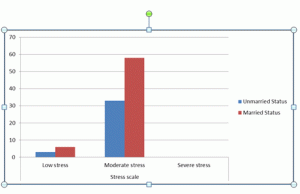
Table 2. Comparison between Marital status in Age, teaching experience,
hand grip strength and stress scale of school teaching N=100
| Variables | Marital status | t test value | DF | P-value | |
| Unmarried (n=36) | Married (n=64) | ||||
| Age | 28.14 ± 4.549 | 35.58 ± 4.396 | 8.022 | 98 | 0.001 (Sig.) |
| Years of Teaching Experience | 4.78 ± 3.979 | 10.03 ± 5.297 | 5.180 | 98 | 0.001 (Sig.) |
| Right Hand Grip Strength | 33.72 ± 8.179 | 31.31 ± 8.204 | 1.411 | 98 | 0.161 (Non Sig.) |
| Left Hand Grip Strength | 33.31 ± 10.337 | 31.95 ± 10.220 | 0.633 | 98 | 0.528 (Non Sig.) |
| Total PSS score | 18.00 ± 3.080 | 18.48 ± 3.385 | 0.709 | 98 | 0.480 (Non Sig.) |
Above table shows that there was statistically significant comparison unmarried and married status in age and teaching experience with P<0.05. Married group had higher value than unmarried group.There was no significant comparison between unmarried and married status in right- and left-hand grip strength and stress scale score with P>0.05. There were no changes in both groups.
DISCUSSION
This study explored how gender and marital status relate to psychosocial and physical well-being—specifically stress levels, hand grip strength, and knee joint proprioception—among school teachers aged 25 to 40 years. Overall, most participants reported moderate stress, regardless of marital status or gender, underscoring that teaching remains a demanding profession. Interestingly, no significant differences in stress levels were observed between married and unmarried teachers, suggesting that occupational stress is experienced broadly, irrespective of personal life circumstances.
In terms of physical performance, knee proprioception proved to be a more sensitive marker than hand grip strength. Unmarried teachers consistently performed better in tasks requiring awareness of knee movement, single-leg balance, and knee position matching without visual input. These differences may reflect variations in physical activity, lifestyle, or joint fatigue between the groups. Hand grip strength, while slightly higher in unmarried teachers, did not show significant differences between groups, indicating similar upper limb function across marital status categories.
The study also found a significant association between marital status and teaching experience, with married teachers generally being older and having more years of service. Despite this, increased age and experience did not appear to reduce stress or improve grip strength or proprioception, aligning with previous research that suggests chronic occupational stress and physical strain may persist even with experience in demanding environments.
Supporting these findings, [20] reported that knee proprioception differs depending on whether assessments are performed in weight-bearing or non-weight-bearing positions, highlighting the sensitivity of proprioceptive measures and the importance of standardized testing. [5] observed differences in hand grip strength among teachers in public versus private sectors, suggesting that occupational context may influence upper limb strength—a nuance that may explain why marital status alone did not produce significant differences in our sample. Furthermore, Nyamboha et al. (2025)21 emphasized that psychosocial factors such as workload and support affect teaching effectiveness, reflecting the universal stress patterns observed in our study.
Overall, the findings highlight that teaching is inherently stressful and that physical performance, particularly proprioception, may vary with lifestyle and personal factors. The female-dominated sample mirrors real-world teaching demographics but limits generalizability to male teachers. These results underscore the need for targeted interventions to support teacher well-being and suggest that both psychosocial and physical dimensions should be considered in professional health programs.
CONCLUSION
While hand grip strength did not vary significantly between groups, proprioceptive performance showed notable differences, with unmarried teachers demonstrating better joint awareness and balance. These findings suggest that while psychosocial stress is widespread, physical performance markers like proprioception may be more sensitive to differences in personal circumstances. The results emphasize the importance of addressing both physical and psychological dimensions of teacher well-being through regular health monitoring, ergonomic training, and stress-reduction initiatives—especially within school systems where prolonged standing, multitasking, and mental fatigue are common. Future research with a larger, more diverse sample and longitudinal design could help clarify how these variables interact over time.
Ethical Clearance: Ethical clearance was obtained from Santosh College of Physiotherapy, Santosh Medical College and Hospital, Ghaziabad, dated 18-10-24 (REF NO.- SCOP/OCT-24/ECN-94510023666).
Conflict of Interest– None
Funding- Self-funded
ACKNOWLEDGEMENTS
The authors acknowledge all those who provided support and constructive input throughout this research.
Data availability: The data associated with the paper are not publicly available but can be obtained from the corresponding author upon reasonable request.
REFERENCES
- Gomes NR, de-Assis-Santos CC, Rezende BA, de-Medeiros AM. Psychosocial factors at work and teachers’ illness: a systematic review. Rev Bras Med Trab. 21(3):e20221014. doi:10.47626/1679-4435-2022-1014
- Ibrahim RZAR, Zalam WZM, Foster B, et al. Psychosocial Work Environment and Teachers’ Psychological Well-Being: The Moderating Role of Job Control and Social Support. Int J Environ Res Public Health. 2021;18(14):7308. doi:10.3390/ijerph18147308
- Ng YM, Voo P, Maakip I. Psychosocial factors, depression, and musculoskeletal disorders among teachers. BMC Public Health. 2019;19(1):234. doi:10.1186/s12889-019-6553-3
- Wischlitzki E, Amler N, Hiller J, Drexler H. Psychosocial Risk Management in the Teaching Profession: A Systematic Review. Saf Health Work. 2020;11(4):385-396. doi:10.1016/j.shaw.2020.09.007
- Yadav SKS, Rawte DBR. A comparative study of hand grip strength between teachers belonging to public and private sector of Uttar Pradesh. Int J Physiol Nutr Phys Educ. 2019;4(1):762-763.
- Balaji P, Poornima S. Correlation of BMI and hand anthropometry with hand grip plus endurance for 1/3rd of Tmax among staff of teaching institute at Bengaluru, India. Int J Physiol Nutr Phys Educ. 2017;2(1):204-208.
- Lee A, Park S. Factors Affecting Handgrip Strength in Menopausal Women at High Risk of Sarcopenia: A National Population-Based Study. Healthcare (Basel). 2024;12(24):2590. doi:10.3390/healthcare12242590
- Rathore VS, Jasmati, Yadav DS. The relationship among hand grip strength, leg strength and back strength of male non-teaching staff of guru Ghasidas Vishwavidyalaya Bilaspur. Int J Physiol Nutr Phys Educ. 2021;6(2):20-22.
- Hillier S, Immink M, Thewlis D. Assessing Proprioception: A Systematic Review of Possibilities. Neurorehabil Neural Repair. 2015;29(10):933-949. doi:10.1177/1545968315573055
- Ituen OA, Smits-Engelsman B, Ferguson G, Duysens J. Proprioception and its relationship with range of motion in hypermobile and normal mobile children. Exp Brain Res. 2024;242(12):2727-2735. doi:10.1007/s00221-024-06937-1
- Li L, Ji ZQ, Li YX, Liu WT. Correlation study of knee joint proprioception test results using common test methods. J Phys Ther Sci. 2016;28(2):478-482. doi:10.1589/jpts.28.478
- Akbar UU, Bhatti ZM, Asim HM, Khan I. EFFECTS OF MILD, MODERATE AND INTENSE PHYSICAL ACTIVITY ON KNEE JOINT PROPRIOCEPTION IN HEALTHY YOUNG ADULTS. Pakistan Journal of Rehabilitation. 2023;12(1):117-123. doi:10.36283/pjr.zu.12.1/017
- Guede-Rojas F, Benavides-Villanueva A, Salgado-González S, et al. Effect of strength training on knee proprioception in patients with knee osteoarthritis: A systematic review and meta-analysis. Sports Med Health Sci. 2024;6(2):101-110. doi:10.1016/j.smhs.2023.10.005
- Noor R, Olyaei G, Hadian MR, Talebian S, Salman Bashir M. A reliable and accurate system of joint position sense measurement. biomedicalresearch. 2018;29(12). doi:10.4066/biomedicalresearch.29-18-410
- Peris-Ramos HC, Míguez MC, Rodriguez-Besteiro S, David-Fernandez S, Clemente-Suárez VJ. Gender-Based Differences in Psychological, Nutritional, Physical Activity, and Oral Health Factors Associated with Stress in Teachers. Int J Environ Res Public Health. 2024;21(4):385. doi:10.3390/ijerph21040385
- Fernandes MH, Rocha VM da. Impact of the psychosocial aspects of work on the quality of life of teachers. Braz J Psychiatry. 2009;31(1):15-20. doi:10.1590/s1516-44462009000100005
- Odebode AA. Influence of Psychosocial Factors on Job Performance of Female Teachers in Kwara State, Nigeria. INT J INSTRUCTION. 2018;11(3):233-248. doi:10.12973/iji.2018.11317a
- Tahir M, Maqsood M, Azhar N, Safdar Z, Amin U, Waheed TS. Association of Knee Pain in Long Standing and Sitting among University Teachers: Association of Knee Pain in University Teachers. The Healer Journal of Physiotherapy and Rehabilitation Sciences. 2023;3(1):314-321. doi:10.55735/hjprs.v3i1.124
- Hussien HG, Raheem YA. Risk factors and awareness about knee osteoarthritis among secondary school teachers. In: 2020. Accessed July 7, 2026.https://www.semanticscholar.org/paper/Risk-factors-and-awareness-about-knee-among-school-Hussien-Raheem/317dc0ed4dc34fa90bf4d03da92dc3f865f423dc
- Lokhande M, Shetye J, Mehta A, Deo M. Assessment of Knee Joint Proprioception in Weight Bearing and in Non-Weight Bearing Positions in Normal Subjects. Accessed July 7, 2026. https://www.semanticscholar.org/paper/Assessment-of-Knee-Joint-Proprioception-in-Weight-Lokhande-Shetye/3ebcfc84b5e4d4cf42cd97de7950f830149f8d6b
- Nyamboha A, Mhagama M, Tangi F. Effects of the Psychosocial Factors Experienced by Teachers on Teaching Effectiveness in Secondary SchoolsEffects of the Psychosocial Factors Experienced by Teachers on Teaching Effectiveness in Secondary Schools in Ilemela Municipality. JHED. 2024;6(2):01-12. doi:10.22161/jhed.6.2.1