
1MPT, Department of Physiotherapy, Santosh Paramedical College and Hospital, Ghaziabad, India
2MBBS, Santosh Deemed to be University, Ghaziabad India
3Assistant Professor, Department of Physiotherapy, Santosh Paramedical College and Hospital, Ghaziabad India
4Professor/Principal, Department of Physiotherapy, Santosh Paramedical College and Hospital, Ghaziabad, India
5Dean, Santosh Paramedical College and Hospital, Ghaziabad, India
6Assistant Professor, Department of Microbiology, Santosh Medical College, Santosh Deemed to Be University Ghaziabad, India
Corresponding Author Email: deepak.raghav@santosh.ac.in
Article Publishing History
Received: 07/07/2026
Accepted After Revision: 19/08/2026
Lumbar radiculopathy affecting the lower limbs is a common condition among adults, often influenced by multiple demographic and occupational factors. Understanding these contributing elements is crucial for improving diagnosis and treatment approaches. Aim: This study aimed to evaluate how factors such as age, gender, occupation, aggravating and relieving factors, and symptom laterality influence the prevalence and presentation of lumbar radiculopathy in the lower limbs. A cross-sectional observational study was conducted over six months across physiotherapy clinics in Delhi NCR. A total of 100 participants aged 35–50 years with clinically suspected lumbar radiculopathy were included using standard methodology. Participants completed a structured questionnaire capturing symptom patterns, occupational background, and associated aggravating and relieving factors. Data were analysed to assess prevalence patterns and associations using chi-square tests. Lumbar radiculopathy was most prevalent among individuals aged 36–40 years (43%), with a higher incidence in males (58%) and those engaged in sedentary occupations (46%). Common aggravating factors included prolonged sitting (31%) and standing (24%), while pain medication (43%) and rest (41%) were the most reported relieving measures. Most participants (71%) experienced moderate and constant symptoms, yet only 31% had received physiotherapy. Statistically significant associations were observed between gender and variables such as occupation, symptom severity, and treatment uptake (p<0.05). Similarly, occupation was significantly associated with symptom patterns, laterality, treatment behaviour, and diagnosis confirmation (p<0.05). Bilateral symptoms were less common (9%) but showed significant association with occupational category and diagnosis status. The findings emphasise that lumbar radiculopathy in the lower limbs is influenced by occupational strain, gender, and symptom awareness. Early diagnosis, patient education, and greater utilisation of physiotherapy—especially in sedentary workers—are vital for effective management. Promoting workplace modifications and timely referrals can help reduce the chronic burden of this condition.
Lumbar radiculopathy, lower limb pain, occupational health, prevalence study, physiotherapy utilization, sedentary lifestyle, symptom severity
Anjali, Harshvardhan, Prince. K, Deepak. R, Sharma. R. K, Sharma. S. Prevalence of Lumbar Radiculopathy in the Lower Limb and Its Association With Age, Gender, Occupation, and Laterality among middle-aged adults. 2026;13(2) SSN Journal of Management & Technology Research Journal
Anjali, Harshvardhan, Prince. K, Deepak. R, Sharma. R. K, Sharma. S. Prevalence of Lumbar Radiculopathy in the Lower Limb and Its Association With Age, Gender, Occupation, and Laterality among middle-aged adults. 2026;13(2) SSN Journal of Management & Technology Research Journal. Available from: <a href=”https://shorturl.at/QCuhT“>https://shorturl.at/QCuhT</a>
INTRODUCTION
Lumbar radiculopathy is a common clinical condition resulting from compression or irritation of the lumbar nerve roots, often manifesting as pain, numbness, tingling, or weakness radiating into one or both lower limbs. It is typically associated with degenerative changes in the lumbar spine, such as lumbar disc herniation, spinal stenosis, or foraminal narrowing, which lead to inflammation and nerve dysfunction [1]. Over the past decades, this condition has gained increasing clinical relevance due to its rising prevalence, particularly in working-age adults. Studies have highlighted lumbar disc herniation as a primary cause of lumbar radiculopathy, with significant implications for quality of life, occupational productivity, and healthcare utilization [2,3].
Low back pain continues to be one of the most common musculoskeletal complaints worldwide, affecting people of all ages and occupational backgrounds [4]. Among its various causes, lumbar radiculopathy is particularly debilitating because of its characteristic radiating pain, sensory disturbances, and motor deficits in the lower limbs5. It is clinically defined as a syndrome resulting from irritation or compression of the lumbar nerve roots, leading to pain that radiates along the course of the affected nerve. According to [5], lumbar radiculopathy represents a major cause of disability in the working-age population and is associated with a significant socioeconomic burden. The condition not only affects physical health but also contributes to reduced productivity and quality of life.
The most common underlying cause of lumbar radiculopathy is intervertebral disc herniation, although other contributors such as spinal stenosis and degenerative changes in the lumbar spine also play important roles. [6] emphasized that disc herniation at the L4–L5 and L5–S1 levels is most frequently associated with radicular symptoms, given the anatomical and biomechanical stress placed on these segments. [7] observed that radiating low back pain accounts for a large proportion of primary care consultations, making it a major clinical issue for health systems globally. The condition can be acute or chronic, with some patients recovering spontaneously while others develop long-standing symptoms requiring prolonged management.
The incidence and prevalence of lumbar radiculopathy vary depending on demographic and occupational factors [8]. [3], in their systematic review, reported that lumbar disc herniation with radiculopathy is most commonly seen in adults aged 30–50 years, particularly those exposed to occupational risk factors such as heavy lifting, prolonged standing, and awkward working postures. [9] also pointed out that radiculopathy is no longer confined to manual laborers; sedentary office workers are increasingly affected due to poor ergonomic setups and prolonged sitting. This demonstrates that the etiology of lumbar radiculopathy is multifactorial, involving both mechanical and lifestyle-related components.
A particularly important clinical feature of lumbar radiculopathy is the pattern of lower limb involvement [10]. Laterality whether symptoms are present in the right limb, left limb, or bilaterally—can provide valuable diagnostic clues and may influence treatment strategies. [11] noted that unilateral symptoms are more common than bilateral ones, although both patterns are clinically significant. Understanding these laterality trends is essential in planning individualized management, as bilateral involvement may indicate more extensive pathology or advanced degenerative changes.
Aggravating and relieving factors also play a crucial role in the clinical presentation and management of lumbar radiculopathy. Common aggravating factors include prolonged standing, bending forward, lifting heavy objects, and sudden twisting movements. These actions increase pressure on the intervertebral discs and nerve roots, intensifying symptoms [12]. On the other hand, relieving factors often include rest, certain postural adjustments, or physiotherapeutic interventions. [9], in their case study, highlighted how spinal mobilization with leg movement can effectively reduce pain intensity and improve functional outcomes in patients with radiculopathy. Such findings emphasize the value of conservative management strategies, especially in the early stages of the condition. Occupational exposure remains one of the most influential risk factors for the development of lumbar radiculopathy.
[6] described that workers engaged in physically demanding occupations such as construction, agriculture, and manual labor—are at particularly high risk. However, changing workplace dynamics and increasing sedentary lifestyles have shifted the burden toward office workers as well. Prolonged sitting, poor posture, and inadequate ergonomic practices are now recognized as significant contributors to lumbar disc pathology and nerve root irritation.
This dual burden—affecting both active and sedentary workers—highlights the importance of occupational health interventions and workplace ergonomics. Age and gender distribution have also been widely discussed in the epidemiology of lumbar radiculopathy. [3] reported that middle-aged adults are most commonly affected, coinciding with their peak working years. While several studies suggest that males are more affected than females due to greater occupational physical strain, recent trends indicate that the prevalence is becoming more balanced as work patterns evolve. This underscores the need for inclusive preventive strategies that address risk factors across different demographic groups.
A clear understanding of aggravating and relieving factors can guide clinicians in both diagnosis and treatment. Activities involving lumbar flexion, axial loading, or sudden movements tend to exacerbate pain, while rest, specific postures, and physiotherapy interventions can bring relief. Singh and [9] demonstrated the effectiveness of targeted mobilization techniques in reducing pain and improving lower limb function, supporting the role of physiotherapeutic strategies in comprehensive management plans.
MATERIAL AND METHODS
This cross-sectional observational study was conducted at various physiotherapy clinic set ups in the Delhi National Capital Region (NCR) over a period of six months. A total of 100 participants were recruited using a convenience sampling method. Ethical clearance was obtained from the institutional ethical committee (REF NO.- SCOP/OCT-24/ECN-94510023665) before the commencement of the study. Eligible participants included males and females aged between 35 and 50 years, residing in the Delhi NCR, from any occupational background, and presenting with symptoms of lumbar radiculopathy for a minimum duration of two weeks. Individuals were excluded if they had any spinal deformities, a history of psychiatric illness or mental instability, or if they had previously undergone spinal surgery. No intervention was administered, as the study was observational in nature [13].
Procedures: The study was conducted across various physiotherapy clinics where individuals presenting with symptoms indicative of lumbar radiculopathy affecting the lower limbs were identified. An initial clinical evaluation was carried out to confirm the provisional diagnosis. Participants were then screened based on predefined inclusion and exclusion criteria. Those who met the eligibility criteria were provided with detailed information about the study and were invited to participate voluntarily. Written informed consent was obtained from each participant before proceeding further. Once enrolled, each participant received a structured questionnaire to fill out, which included questions related to their symptoms, daily function, and relevant background information. The completed questionnaires were collected and securely stored. The data were then compiled and analyzed to draw conclusions aligned with the study objectives [13].
RESULTS
A total of 100 adult patients with lumbar radiculopathy affecting the lower limb were included in the study, with a mean age of 41.58 ± 4.61 years. The largest age group was 36–40 years (43%), followed by 46–50 years (27%), 41–45 years (22%), and 35 years (8%). Males comprised 58% of the cohort, while females accounted for 42%.Almost half of the participants (46%) were engaged in sedentary occupations, whereas 22% reported moderate physical activity, and equal proportions (16% each) performed light or heavy physical work.
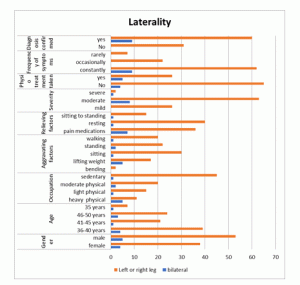
Prolonged sitting (31%) emerged as the most common aggravating factor, followed by standing (24%), lifting weights (22%), walking (21%), and bending (2%). Pain relief was most frequently achieved with analgesic medications (43%) and rest (41%), while a smaller proportion reported relief from changing posture (16%).Moderate symptom severity was predominant (71%), with 26% experiencing mild symptoms and only 3% reporting severe symptoms. Left-leg involvement was most common (69%), followed by right-leg (22%) and bilateral presentation (9%). Most patients (71%) reported constant symptoms, 22% had occasional symptoms, and 7% experienced them rarely. While 69% had received a confirmed diagnosis, 31% had not. Notably, physiotherapy had not been undertaken by the majority (69%), while 31% had received such treatment.
Statistical analysis revealed significant associations between gender and occupation, aggravating factors, symptom severity, physiotherapy use, symptom frequency, and diagnosis confirmation (p < 0.05). Occupational category was also significantly associated with aggravating and relieving factors, symptom severity, laterality, physiotherapy use, symptom frequency, and diagnosis status (p < 0.05). Furthermore, diagnosis confirmation was significantly related to relieving factors, symptom severity, physiotherapy use, symptom frequency, gender, and occupation (p < 0.05). Laterality showed significant association with occupation and diagnosis confirmation but not with other variables.
Table 1. Association of gender and certain factors of lumber radiculopathy in legs N=100
| Variables | Categories | Gender | Chi-Square test value | DF | P-value | |
| Female | Male | |||||
| Occupation | heavy physical | 1 | 15 | 22.817 | 3 | .001
(Sig.) |
| light physical | 13 | 3 | ||||
| moderate physical | 13 | 9 | ||||
| sedentary | 15 | 31 | ||||
| Aggravating factors | bending | 0 | 2 | 16.81 | 4 | .002
(Sig.) |
| lifting weight | 3 | 19 | ||||
| sitting | 11 | 20 | ||||
| standing | 15 | 9 | ||||
| walking | 13 | 8 | ||||
| Relieving factors | pain medications | 18 | 25 | 0.194 | 2 | .907
(N Sig.) |
| resting | 18 | 23 | ||||
| sitting to standing | 6 | 10 | ||||
| Severity | Mild | 5 | 21 | 10.686 | 2 | .005
(Sig.) |
| moderate | 34 | 37 | ||||
| severe | 3 | 0 | ||||
| Laterality | bilateral | 4 | 5 | 2.523 | 2 | .283
(N Sig.) |
| left leg | 32 | 37 | ||||
| right leg | 6 | 16 | ||||
| Physiotherapy treatment taken | No | 20 | 49 | 15.476 | 1 | .001
(Sig.) |
| Yes | 22 | 9 | ||||
| Frequency of symptoms | constantly | 36 | 35 | 9.236 | 2 | .010
(Sig.) |
| occasionally | 6 | 16 | ||||
| rarely | 0 | 7 | ||||
| Diagnosis confirmed | No | 7 | 24 | 6.955a | 1 | .008
(Sig.) |
Above table shows that there was statistically significant association between gender and occupation, aggravating factors, severity, physiotherapy treatment taken, symptoms frequency, and diagnosis with P<0.05 but no association with relieving factors and laterality with p>0.05. Majority of variables show relationship with gender in this study.
Graph: 1 Graph shows statistically significant association between gender and occupation, aggravating factors, severity.

Table 2. Association of diagnosis confirmed and certain factors of lumber radiculopathy in leg N=100
| Variables | Categories | Diagnosis confirmed | Chi-Square test value | DF | P-value | |
| No | Yes | |||||
| Aggravating factors | Bending | 1 | 1 | 8.282 | 4 | .082
(N. Sig) |
| lifting weight | 3 | 19 | ||||
| Sitting | 15 | 16 | ||||
| Standing | 6 | 18 | ||||
| Walking | 6 | 15 | ||||
| Relieving factors | pain medications | 1 | 42 | 29.07 | 2 | .001
(Sig.) |
| Resting | 22 | 19 | ||||
| sitting to standing | 8 | 8 | ||||
| Severity | Mild | 26 | 0 | 78.271 | 2 | .001
(Sig.) |
| moderate | 5 | 66 | ||||
| Severe | 0 | 3 | ||||
| Laterality | Bilateral | 0 | 9 | 4.512 | 2 | .105
(N Sig.) |
| left leg | 24 | 45 | ||||
| right leg | 7 | 15 | ||||
| Physio treatment taken | No | 29 | 40 | 12.657 | 1 | .001
(Sig.) |
| Yes | 2 | 29 | ||||
| Frequency of symptoms | constantly | 3 | 68 | 82.105 | 2 | .001
(Sig.) |
| occasionally | 21 | 1 | ||||
| Rarely | 7 | 0 | ||||
| Gender | Female | 7 | 35 | 6.955 | 1 | .008
(Sig.) |
| Male | 24 | 34 | ||||
| Occupation | heavy physical | 1 | 15 | 15.716 | 3 | .001
(Sig.) |
| light physical | 4 | 12 | ||||
| moderate physical | 3 | 19 | ||||
| sedentary | 23 | 23 | ||||
| Age | 35 years | 3 | 5 | 1.113 | 3 | 0.774
(N Sig.) |
| 36-40 years | 11 | 32 | ||||
| 41-45 years | 8 | 14 | ||||
| 46-50 years | 9 | 18 | ||||
Above table shows that there was statistically significant association between occupation with relieving factors, severity, laterality, physiotherapy treatment taken, symptoms frequency, gender and occupation with P<0.05 but no association with aggravating factors and age with P>0.05. Majority of variables show relationship with occupation in this study.
Graph: 2 showing statistically significant association between occupation with relieving factors, severity, laterality, physiotherapy treatment taken, symptoms frequency, gender and occupation.
DISCUSSION
This study examined the demographic, occupational, and clinical characteristics of adults diagnosed with lumbar radiculopathy of the lower limb. The mean age of participants was 41.58 years, with most participants aged 36–40, followed by those in the 46–50 and 41–45-year groups. Males were more frequently affected than females. Nearly half of the cohort reported sedentary occupations, while the remainder were engaged in moderate, light, or heavy physical work. Prolonged sitting emerged as the most common aggravating factor, followed by standing, lifting weights, walking, and bending. Pain relief was most often achieved through medication and rest, with fewer participants reporting relief through posture change.
Most participants presented with moderate symptom severity, and constant symptoms were more common than occasional or rare episodes. Left-leg involvement predominated, followed by right-leg and bilateral presentations. Although a confirmed diagnosis was reported in the majority of cases, physiotherapy utilization remained low. Statistical analysis revealed significant associations between gender and multiple variables, including occupation, aggravating factors, severity, physiotherapy use, symptom frequency, and diagnosis confirmation. Occupation was also significantly associated with most clinical variables, while diagnosis confirmation was linked to severity, symptom frequency, gender, and occupation. Laterality was significantly associated with occupation and diagnosis confirmation but not with other factors.
These findings are consistent with previous literature. [14] highlighted that middle-aged adults, particularly males, are at higher risk for developing lumbar radiculopathy, supporting our observed age and gender patterns. [13] emphasised the importance of standardised assessment tools for evaluating lumbar spine conditions, which aligns with our observations regarding symptom severity, diagnosis confirmation, and physiotherapy utilisation. [15] reviewed lumbar radiculopathy management and underscored the significance of early diagnosis, individualised care, and recognition of aggravating factors, reflecting the patterns observed in our study.
The predominance of left-leg involvement aligns with findings from other studies, suggesting lateral differences may be common in lumbar radiculopathy presentations. The low utilisation of physiotherapy despite confirmed diagnoses indicates potential barriers to care that should be addressed in future research and clinical practice.
Overall, these results highlight the close interplay between demographic characteristics, occupational demands, and clinical patterns in adults with lumbar radiculopathy. While the study provides valuable insights, the relatively small sample size limits generalizability. Future studies with larger populations and long-term follow-up are warranted to validate and expand upon these findings.
CONCLUSION
In this study, lumbar radiculopathy of the lower limb was most common in individuals aged 36–40 years, with a higher prevalence among males. Sedentary occupation and prolonged sitting were the leading occupational and aggravating factors, while pain medication and rest were the primary relieving strategies. Moderate symptom severity, constant symptom frequency, and left-leg involvement predominated. Significant associations were identified between demographic and occupational factors and several clinical parameters. These results highlight the need for early recognition of occupational and demographic risk patterns to guide timely and targeted management of lumbar radiculopathy.
Ethical Clearance: Ethical clearance was obtained from the institutional ethical committee (REF NO.- SCOP/OCT-24/ECN-94510023665) before the commencement of the study.
Conflict of interest: None
Data Availability: All data are available with the corresponding author upon reasonable request.
Funding: Nil
REFERENCES
- Ali S, Khan Z, Naffeesuddin, Muhammad Saqib. Frequency of Recurrence Lumbar Disc Herniation after Conventional Discectomy. IJBR. 2025;3(7):917-921. doi:10.70749/ijbr.v3i7.2225
- Song P, Ma C, Xu C, Zhang Y, Yuan Y. Efficacy of Combined High-Intensity Laser Therapy and Collagenase Chemonucleolysis in Lumbar Disc Herniation Management: a Prospective Randomized Controlled Trial. Pain Ther. 2025;14(4):1379-1398. doi:10.1007/s40122-025-00756-0
- Hincapié CA, Kroismayr D, Hofstetter L, et al. Incidence of and risk factors for lumbar disc herniation with radiculopathy in adults: a systematic review. Eur Spine J. 2025;34(1):263-294. doi:10.1007/s00586-024-08528-8
- Gaowgzeh RA, Chevidikunnan MF, Al Saif A, El-Gendy S, Karrouf G, Al Senany S. Prevalence of and risk factors for low back pain among dentists. J Phys Ther Sci. 2015;27(9):2803-2806. doi:10.1589/jpts.27.2803
- Nicol V, Verdaguer C, Daste C, et al. Chronic Low Back Pain: A Narrative Review of Recent International Guidelines for Diagnosis and Conservative Treatment. J Clin Med. 2023;12(4):1685. doi:10.3390/jcm12041685
- Topuz K, Eroglu A, Simsek H, Atabey C, Cetinkal A, Colak A. Demographical Aspects of Central Large Lumbar Disc Herniation. Turk Neurosurg. 2016;26(1):111-118. doi:10.5137/1019-5149.JTN.7320-12.2
- Spijker-Huiges A, Groenhof F, Winters JC, van Wijhe M, Groenier KH, van der Meer K. Radiating low back pain in general practice: incidence, prevalence, diagnosis, and long-term clinical course of illness. Scand J Prim Health Care. 2015;33(1):27-32. doi:10.3109/02813432.2015.1006462
- He W, Zhu R, Liu A. Demographic Factors Influencing Injection Therapy for Radiculopathy Pain Management. The National High School Journal of Science. Published online 2025:1-5.
- Singh V, Malik M, Department of Physiotherapy, Guru Jambheshwar University of Science and Technology, Hisar, India. LUMBAR RADICULOPATHY MANAGED WITH SPINAL MOBILIZATION WITH LEG MOVEMENT: A CASE STUDY. Ro J Neurol. 2021;20(2):246-249. doi:10.37897/RJN.2021.2.20
- Peacock M, Douglas S, Nair P. Neural mobilization in low back and radicular pain: a systematic review. J Man Manip Ther. 2023;31(1):4-12. doi:10.1080/10669817.2022.2065599
- Vashishtha DrS, Singh DrSK, Verma DrA, Anand DrA. A study on effectiveness of selective nerve root blocks in lumbar radiculopathies. Int J Orthop Sci. 2019;5(3):191-199. doi:10.22271/ortho.2019.v5.i3d.1530
- Pojskic M, Bisson E, Oertel J, Takami T, Zygourakis C, Costa F. Lumbar disc herniation: Epidemiology, clinical and radiologic diagnosis WFNS spine committee recommendations. World Neurosurg X. 2024;22:100279. doi:10.1016/j.wnsx.2024.100279
- Bendebba M, Dizerega GS, Long DM. The Lumbar Spine Outcomes Questionnaire: its development and psychometric properties. Spine J. 2007;7(1):118-132. doi:10.1016/j.spinee.2006.06.382
- Schoenfeld AJ, Laughlin M, Bader JO, Bono CM. Characterization of the incidence and risk factors for the development of lumbar radiculopathy. J Spinal Disord Tech. 2012;25(3):163-167. doi:10.1097/BSD.0b013e3182146e55
- Berry JA, Elia C, Saini HS, Miulli DE. A Review of Lumbar Radiculopathy, Diagnosis, and Treatment. Cureus. 2019;11(10):e5934. doi:10.7759/cureus.5934